Chapter 27 - The End
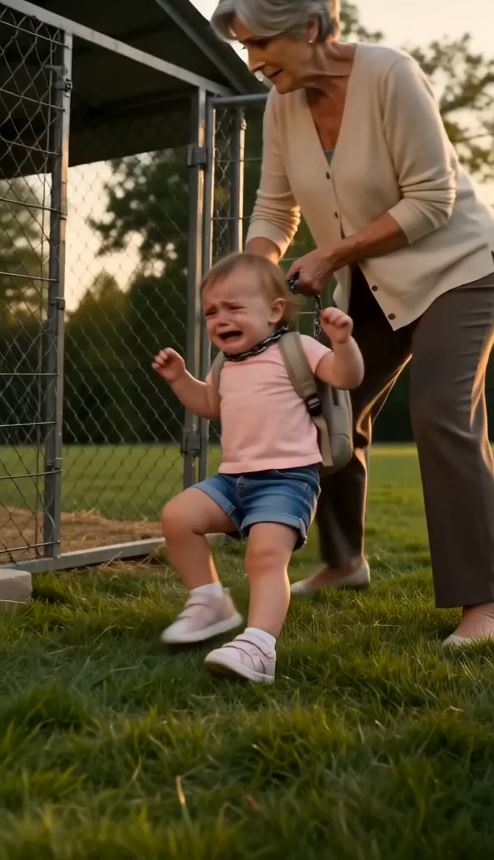
Three years after I found my daughter behind the wire door of a dog kennel, I was thirty-seven.
Lily was three years and nine months old.
Diane was sixty-four.
Claire had been gone three and a half years.
That arithmetic still hurt.
Lily had no lasting physical injury from the chain.
No scar around her neck.
No chronic airway problem.
No neurological impairment.
Her pediatrician eventually stopped asking about the incident except during relevant history reviews.
Good.
Medical history should not become identity.
Emotionally, the aftermath had been more complicated.
For nearly a year, Lily disliked enclosed play spaces.
Not every one.
Tunnels at indoor playgrounds sometimes.
Cribs? She outgrew.
Gates.
She wanted doors open.
Then gradually:
Less.
At three, she crawled into a fabric play tent at daycare and closed the flap herself.
Her teacher mentioned it casually.
I went to my car afterward and cried.
Not because tents are profound.
Because nobody else in the room knew why that ordinary action mattered.
That is one of the strange things about recovery.
The world does not applaud.
It should not.
The child simply gets more of childhood back.
Sophie remained part of our lives for two years.
Then she accepted a full-time position with another family.
I panicked.
Not Lily.
Me.
Of course.
She said:
“Daniel, this is normal.”
“I know.”
“You have daycare.”
“I know.”
“Backups.”
“I know.”
“You’re doing the Claire thing.”
“What?”
“Systems.”
I smiled.
Claire would have loved Sophie.
Maybe hated how organized she was.
Hard to know.
I had built redundancy.
Daycare.
A regular sitter.
Beth one weekend a month if she wanted.
Ethan occasionally.
No single adult had total control over Lily’s routine.
Not because I expected abuse everywhere.
Because dependence can distort judgment.
If one person’s help becomes essential, boundaries start feeling expensive.
I never wanted that again.
My relationship with work changed too.
For the first year, I reduced travel.
Then gradually returned.
Not because career mattered more than Lily.
Because providing stable life included remaining a functional adult.
I stopped treating every absence as moral failure.
At first, when I traveled overnight, Lily asked:
“Come back?”
“Yes.”
“What time?”
“Tomorrow after breakfast.”
Then later:
“Bring snack.”
Growth.
Dr. Ellison helped me understand I had become hypervigilant after the kennel.
I watched caregivers’ hands.
Tone.
Door positions.
Sometimes safety became surveillance.
One afternoon I picked Lily up from daycare and saw a teacher holding her wrist.
My body surged.
Then context:
Lily had tried to run into the parking lot.
The teacher held her wrist.
Reasonable.
Safe.
I breathed before speaking.
That was progress too.
Not every adult touching my daughter was Diane.
Not every boundary was abuse.
The goal was not to raise Lily in a world with no frustration.
The goal was to teach her the difference between frustration and fear.
“No, you cannot have ice cream for breakfast.”
Safe.
“You have to sit in your car seat.”
Safe.
“Hold my hand crossing the street.”
Safe.
“Stop asking for Dad or I’ll break something you love.”
Not safe.
“Get in the cage.”
Not safe.
A child can dislike a rule without the rule becoming cruelty.
Diane had confused compliance with safety.
For a while, I almost confused unrestricted comfort with safety.
Both are mistakes.
My diversion disappeared from the public record under the agreement after successful completion.
I did not treat that as evidence I had done nothing wrong.
The slap happened.
Lily saw.
I owned it.
The kick was never charged separately.
Would a jury have considered it reasonable defense of a child?
Maybe.
I stopped needing the answer.
I knew what I would do differently.
Get between.
Open the kennel.
Take Lily.
Call police.
No extra strike once danger ended.
That was enough.
Diane completed probation without violation.
No new offense.
She remained prohibited from unsupervised contact with minors during supervision unless approved.
After supervision ended, the legal restriction changed.
My boundary did not automatically change with it.
Legal permission and parental trust are different systems.
Diane understood that by then.
At sixty-four, she volunteered twice a week at an animal shelter.
The irony bothered me initially.
Dogs.
Kennels.
Then I learned her role was administrative.
Scheduling.
Donations.
No child-care symbolism.
No need to interpret.
She had also completed a course on child development beyond court requirements.
Not as performance for me?
I could not know.
Behavior counts even when motive is mixed.
We met for coffee every six or eight weeks.
No Lily.
The first year, all we discussed was the case.
By year three:
Weather.
Ethan.
Her blood pressure.
My work.
Claire sometimes.
That was harder.
Diane said once:
“I miss Claire.”
I almost snapped:
“You used her death to justify hurting her daughter.”
Then stopped.
Both could be true.
“You can miss her.”
Diane cried.
“I know.”
She did not ask forgiveness that day.
Good.
The most important conversation between us happened two months before the three-year mark.
Small café.
Morning.
Diane said:
“I used to think fear worked.”
I waited.
“What do you mean?”
“When Lily stopped crying in the kennel, I thought she had learned.”
There.
“What do you think now?”
“She had stopped making noise.”
Yes.
Diane stared at her coffee.
“I confused silence with learning.”
There.
That sentence contained more understanding than the first hundred pages of her legal defense.
I said:
“Yes.”
Then:
“I also thought because I loved her, I couldn’t be abusive.”
My chest tightened.
“What changed?”
“The videos.”
Interesting.
“The court?”
“No.”
“Therapy?”
“Partly.”
“Then?”
“Watching myself stand outside the kennel while she cried for you.”
She swallowed.
“I looked like a stranger.”
I did not comfort her.
No need.
She continued:
“I kept saying I was the person who understood her better than anyone.”
There.
“And?”
“If I understood her, I knew she was terrified.”
There.
Accuracy.
Finally.
I said:
“I believe you understand more now.”
Her eyes lifted.
“Does that mean—”
“No.”
She stopped.
Then nodded.
“Okay.”
That was the test.
Not whether she wanted contact.
Of course she did.
Whether she could hear:
no,
without turning need into entitlement.
She could.
At least that morning.
Lily’s relationship with Claire’s memory changed too.
At three, she knew:
“Mommy Claire.”
Photographs.
Stories.
A short video where Claire laughed because baby Lily sneezed three times.
Lily watched it constantly for one week.
Then forgot.
Grief belonged more to me than her by then.
That hurt.
It was also normal.
I stopped trying to make Claire present in every milestone.
She did not need a chair at preschool events.
No memorial ribbon on birthdays.
No pressure on Lily to perform grief she did not own.
Claire was her mother.
Death had limited memory.
Love could still be inherited through stories without becoming duty.
Beth helped.
She told Lily:
“Your mom hated raisins.”
Lily said:
“I like raisins.”
Beth:
“Traitor.”
Lily laughed.
That was how Claire stayed human.
Not saint.
Not warning.
A woman who hated raisins.
The old chain was gone.
Scrap metal.
The kennel was gone.
The garden patch remained.
Tomatoes did better in year three.
The zucchini continued its campaign against civilization.
Lily loved watering too much.
I said:
“That’s enough.”
“No.”
“Plants drown.”
“No.”
“They do.”
She sprayed my shoes.
I took the hose.
She screamed.
Normal boundary.
No fear.
Then:
“Daddy mean.”
“Correct.”
She ran away laughing.
One Saturday we visited an animal shelter because Sophie—long gone from our regular schedule but still in contact—was adopting a dog.
I hesitated before going.
Kennels.
Metal doors.
Barking.
Then realized I was the only one afraid.
Lily walked down the aisle.
Stopped in front of a brown mutt.
“Why dogs in cages?”
A volunteer said:
“They’re safe here while they wait for homes.”
Lily looked at me.
“People don’t go cages.”
My throat tightened.
“No.”
“Why?”
“Because people deserve different ways of being kept safe.”
The volunteer glanced at me, perhaps confused by how serious my answer sounded.
Lily had already moved on.
“Look at puppy!”
That was good.
The world had not become kennel-shaped for her.
Only for me.
I let that go gradually.
Ethan asked once whether I planned to forgive Diane.
I said:
“I don’t know what you mean.”
He rolled his eyes.
“You know exactly what I mean.”
“No. Do you mean speak to her?”
“I do.”
“Have coffee?”
“Yes.”
“Let her see Lily?”
“No.”
“Trust her to babysit?”
Absolutely not.
“Love her?”
Unfortunately, yes.
One word was too small.
Trust had doors.
So did forgiveness.
Some reopened.
Some did not.
That was not hypocrisy.
It was accuracy.
Marjorie and Diane eventually became friends again.
I learned accidentally.
Did not care.
Marjorie never asked to see Lily.
Good.
She sent one birthday card addressed to me:
For Lily, if you think appropriate.
I read.
Simple.
No mention of Diane.
I gave it to Lily.
Again:
Specific trust.
My house changed.
Not because I moved.
I stayed.
The backyard remained.
I repaired the patio door where Diane had slapped the glass.
I replaced the security cameras with two external cameras and one kitchen entry camera.
Not hidden.
No interior surveillance of caregivers.
That was deliberate.
After the incident, I briefly wanted a camera in every room.
Dr. Ellison asked:
“Do you want to raise Lily in a monitored workplace?”
No.
“Then what are you trying to prevent?”
“Not knowing.”
There.
Impossible goal.
No system can guarantee knowledge.
Safety comes from layers.
Background checks.
Communication.
Child language.
Routine variation.
Professional childcare.
Drop-ins.
Boundaries.
Trust with verification when appropriate.
Not turning the house into evidence storage.
I removed the nursery camera when Lily outgrew it.
That felt surprisingly brave.
At nearly four, she moved into a larger bed.
First night:
“Door open.”
“Yes.”
“Hall light.”
“Yes.”
“Three stories.”
“Two.”
“Three.”
“Two and a song.”
She considered.
“Deal.”
Normal negotiation.
After the second story, she climbed under the blanket.
Then:
“Daddy.”
“What?”
“Grandma Diane your mommy?”
“Yes.”
“Did she put me dog house?”
I froze.
Dr. Ellison had warned that fragments can reappear as language develops.
“Something like that happened when you were smaller.”
“Why?”
“Grandma made a very unsafe choice.”
“Was I bad?”
Immediate.
“No.”
She stared.
“Grandma bad?”
I thought.
“Grandma did something bad and unsafe.”
“Did you hit Grandma?”
My stomach tightened.
She knew from stories? Maybe a fragment.
“Yes.”
“Why?”
“I was angry.”
“Bad?”
“After you were safe, yes. I should not have hit her.”
Lily considered.
Then:
“Everybody bad.”
I smiled sadly.
“Everybody makes bad choices sometimes. Some choices are much more serious than others.”
“Mine?”
“Today?”
“Yes.”
“You flooded my tomatoes.”
She laughed.
Conversation over.
That was parenting.
Answer what is asked.
Do not turn a child’s bedtime into adult confession.
She slept.
I stood in the hallway.
Door open.
Light on.
No cage.
No chain.
No need to guard every breath.
Three years earlier, I had believed the most important thing I could tell Lily was:
I will never let anyone hurt you.
Beautiful promise.
Impossible.
The better promise became:
If something hurts or scares you, you can tell me.
I will listen.
I will act.
I will not ask you to protect the adult who did it.
I will not use your fear to justify my revenge.
I will not confuse silence with safety.
That promise I could practice.
The final ordinary moment happened on a late summer afternoon.
Lily was almost four.
Backyard.
Same grass.
Same maple tree.
The kennel was long gone.
She wore a little backpack because she had become obsessed with carrying plastic animals everywhere.
I sat on the patio steps fixing one of her toy trucks.
Poorly.
She walked toward the garden.
The backpack strap caught briefly on the corner of a low fence.
She stopped.
Pulled.
Could not free it.
My body reacted before my mind.
I stood too quickly.
“Lily.”
She looked at me.
“What?”
I walked halfway.
Then stopped.
She looked over her shoulder.
Saw the strap.
Unhooked it herself.
“Got it.”
I stood there.
Heart pounding.
She frowned.
“Daddy?”
“Yeah?”
“You okay?”
I laughed.
“Yeah.”
She shrugged.
Then kept walking.
Three more steps.
Turned.
“Come help tomatoes.”
I joined her.
She handed me the hose.
Then immediately changed her mind.
“No, me.”
“Of course.”
She watered.
Too much.
Again.
I reached for the nozzle.
She pulled it away.
“Mine.”
“It’s my hose.”
“My garden.”
“It is absolutely not your garden.”
She sprayed my trousers.
I stared.
She burst out laughing.
I started laughing too.
No chain.
No wire door.
No adult mistaking resistance for disobedience that had to be broken.
Just a child saying no to her father over a garden hose.
And a father who finally understood that not every no was a challenge to authority.
Sometimes it was simply a child learning she had a voice.
I let her water the tomatoes for another minute.
Then I turned off the tap.
She protested.
I said:
“That’s enough.”
She frowned.
Then accepted.
Boundary.
Safety.
No fear.
The ordinary difference between care and control.
It had taken our family years to learn.
May you like



The End
Nếu bạn muốn, tôi có thể tiếp tục làm một phiên bản hoàn toàn khác của cùng prompt này, đổi hẳn động cơ phía sau Diane và các video cũ nhưng vẫn giữ nguyên HOOK/Chapter 1.







