Chapter 8
### Part 8
They settled two weeks before Christmas.
Not because they were sorry.
Because Ione found the Hilton Head receipts.
And the Jeep payments.
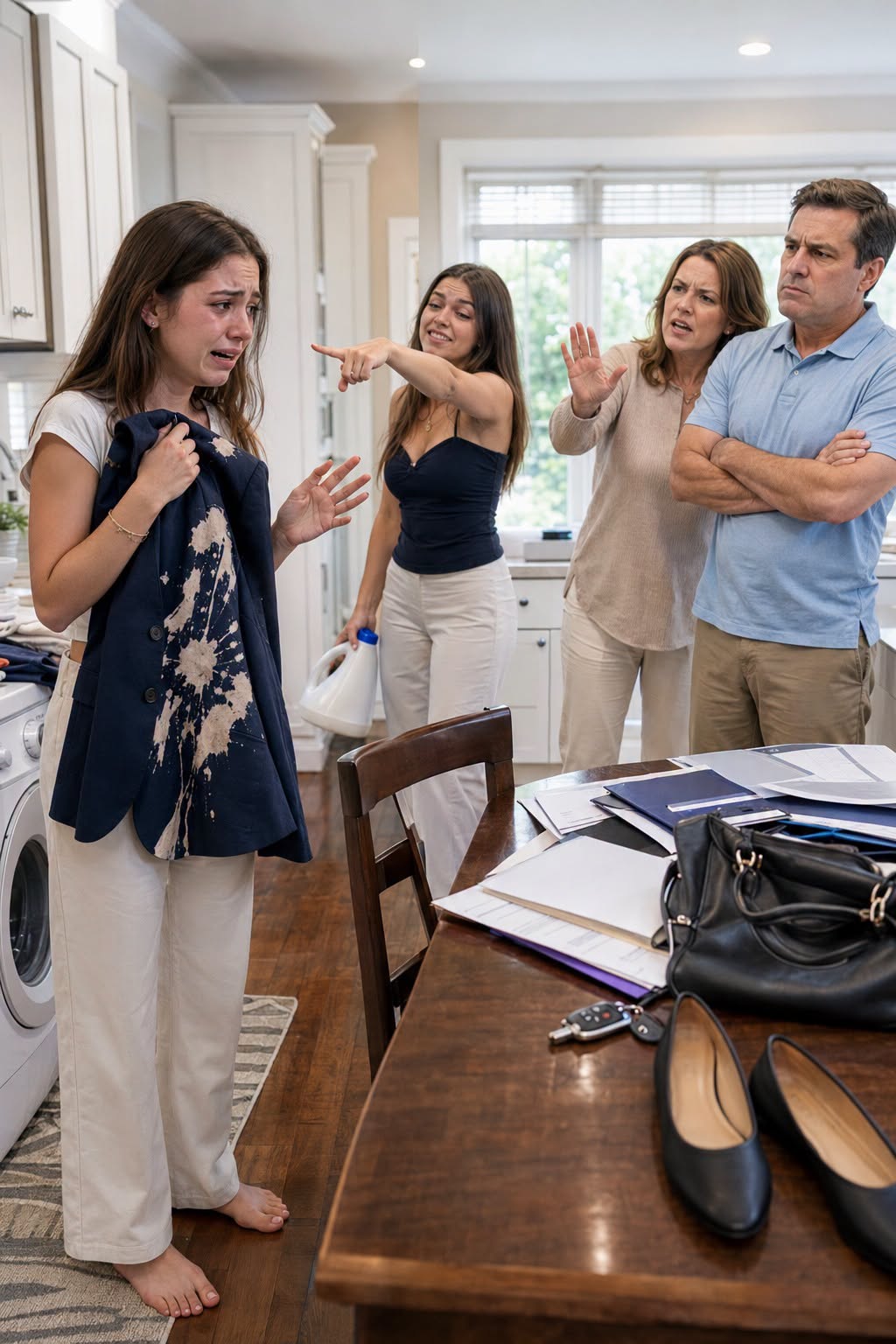
And a check written from the trust account to a contractor who installed my mother’s white quartz countertops, the same countertops where she had told me to stop making a scene over my ruined blazer.
The final amount was $137,600, including the original trust value, lost growth, fees, and a portion of legal costs. My parents had to liquidate my father’s boat, refinance the house, and cash out investments they had always claimed did not exist. Oriana had to return the Jeep or assume the lease herself. She chose to return it and posted three vague quotes online about betrayal.
I did not look at them.
The settlement agreement did not include an apology.
I did not ask for one.
Money moved into a protected account in my name on December 21st. I was in the medical school library when Ione called to confirm it. Outside, snow fell in soft, thick pieces against the dark windows. Inside, someone had left a peppermint mocha on the table beside me, and the whole room smelled faintly like sugar and paper.
“It’s done,” Ione said.
I closed my eyes.
For a second, I expected relief to feel like joy.
It didn’t.
It felt like setting down a bag I had carried so long I had forgotten the shape of my own shoulders.
“Thank you,” I said.
“You did the hard part.”
“I just didn’t answer the phone.”
“Sometimes that is the hard part.”
She was right.
My mother called eleven times that night.
My father called twice.
Oriana sent one text.
Hope Yale was worth destroying your family.
I looked at it while sitting on my apartment floor, surrounded by anatomy notes, laundry, and a half-eaten bowl of instant noodles.
Then I blocked her number.
I blocked my mother next.
Then my father.
My hand hovered for a moment before the last one. Not because I wanted to hear from him. Because even after everything, some childish part of me still remembered sitting in the bleachers while he coached basketball, hoping he would look up and wave.
He rarely did.
I blocked him too.
Christmas came quietly.
Nessa invited me to Detroit. Armand invited me to his aunt’s house in Queens. Talia said her family had “too much food and not enough drama,” which sounded impossible but kind.
I stayed in New Haven.
On Christmas morning, I made cinnamon rolls from a tube, burned the bottoms, and ate them anyway while wearing wool socks and an oversized Yale sweatshirt. The city was still. Church bells rang somewhere down the street. A snowplow scraped past my window.
At noon, an email arrived from my mother.
She must have realized calls and texts were blocked.
The subject line was: Please.
I almost deleted it unread.
Instead, I opened it because I wanted to know whether she had found the truth yet or only the consequences.
Marlowe,
I know you are angry. I know mistakes were made. But you have to understand we were under pressure. Your grandmother never understood how hard it was to raise two girls. Oriana struggled in ways you never did. We thought you would be fine because you were always fine.
We did not think of it as stealing.
We thought of it as balancing.
Please come home for dinner. Your father is not sleeping. Oriana feels attacked. We need to heal.
Mom
Balancing.
I read that word until it became meaningless.
They had balanced their comfort against my future. Their favorite daughter’s feelings against my labor. Their image against my hunger.
Then they wanted healing because consequences had finally entered the room.
I typed one sentence.
I am not coming home.
Then I deleted “home” and wrote “back” instead.
I am not coming back.
I sent it.
That afternoon, I took the ruined blazer out of the closet and carried it to campus. The snow had stopped, and the air smelled clean enough to hurt. I walked to the admissions building, empty for the holiday, and stood outside the doors where I had once arrived ashamed.
I did not cry.
I thought about my grandmother Junia. Lavender soap. Warm hands. Buttons sewn tight. Something of your own.
The money was not what mattered most, although it mattered. It meant rent without panic. Books without skipping meals. Board exam fees without dread. It meant the life she had tried to give me had finally found its way through the people who blocked it.
But the real thing I took back was quieter.
My name.
My work.
My right to stop explaining my pain to people who benefited from it.
When classes resumed in January, Dr. Thorne asked me to speak to a group of undergraduate applicants from rural communities. I said no at first. Public speaking made my stomach turn. Then he said, “Bring whatever version of the story you’re ready to tell.”
So I brought the blazer.
I stood in a lecture room with forty students staring at me, some in suits, some in sweaters, some wearing the nervous look of people who had counted every dollar it took to get there.
I held up the jacket.
“This is what I wore to my Yale interview,” I said.
A murmur moved through the room.
I told them not everything. Not the lawsuit. Not the forged signatures. Not the private details that still felt like bruises.
But I told them this:
“Sometimes the thing you think disqualifies you is the thing that proves you survived the trip.”
Afterward, a girl with chipped black nail polish waited until everyone else left. She touched the cuff of her thrift-store coat and said, “My family thinks I’m ridiculous for applying.”
I looked at her tired eyes and saw myself.
“Apply anyway,” I said.
She nodded like she had been waiting for permission.
May you like



I did not know then that she would email me eight months later to say she got in somewhere.
But I had learned that survival could become a map if you were willing to leave it unfolded for someone else.







