Chapter 3
### Part 3
The man’s name was Dr. Elias Thorne.
I knew that before he introduced himself because I had spent two weeks researching everyone connected to Yale’s admissions committee. Dr. Thorne had been dean of admissions for seventeen years. He had published essays about rural medicine, physician shortages, and why medical schools kept choosing polished applicants who had never sat with a patient who could not afford the bus ride home.
In every photo I had found online, he looked serious.
In person, he looked sharper. Tired, too. Like someone who had learned to distrust easy answers.
I held his gaze and said, “That depends on who you’re looking for, sir.”
For the first time, he smiled.
Not broadly. Not warmly. But enough.
“Come in, Ms. Vesper.”
The interview room had three people in it, not four. Dr. Thorne sat in the center. To his left was a woman with cropped gray hair and a pen poised over a yellow legal pad. Dr. Priya Lowell, professor of internal medicine. To his right sat a younger man in a brown blazer, Dr. Jonah Merritt, whose research focused on community health systems.
I knew their names.
I knew their work.
What I did not know was why Dr. Thorne kept looking at me like I had arrived carrying proof of something.
“Please, sit,” he said.
I sat.
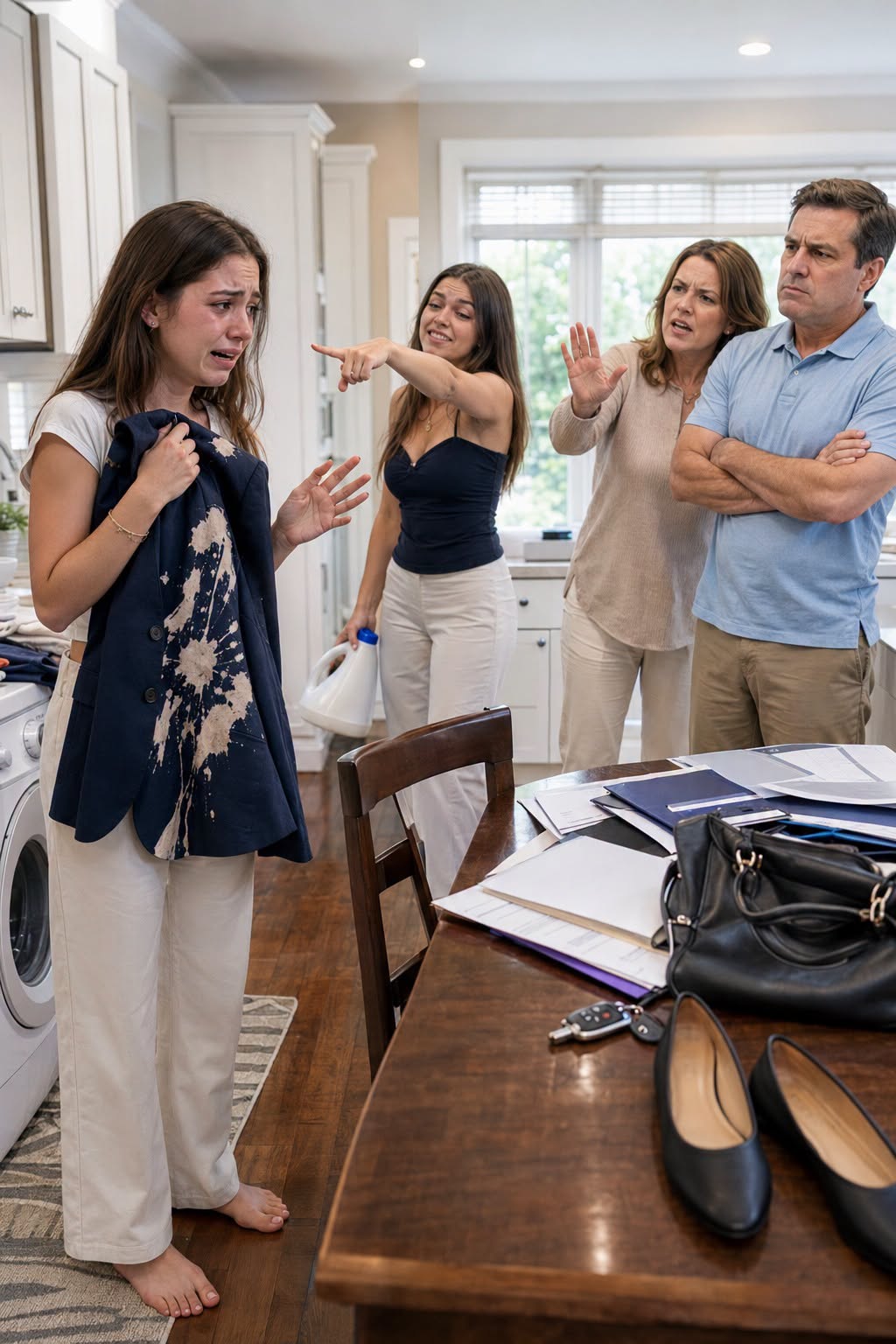
My blazer pulled slightly at the shoulder. The bleached wool caught the room’s warm light.
Dr. Lowell’s eyes flicked toward it, then back to my face with practiced professionalism. Dr. Merritt looked at my application.
Dr. Thorne opened my file slowly. “You submitted a paper last year to the American Medical Student Research Foundation.”
My heart jumped. “Yes, sir.”
“Healthcare Access and Preventable Mortality in Rural Counties.”
“Yes.”
“You collected the survey data yourself?”
“With permission from clinic administrators and under faculty supervision.”
“You drove to five counties.”
“Six, actually. One clinic withdrew from the study, but I still included the travel notes in the appendix because transportation barriers were part of the pattern.”
Dr. Merritt looked up.
Dr. Thorne leaned back. “I remember your appendix.”
That was not what I expected him to say.
He reached into a manila envelope beside his chair and pulled out a photocopied page with highlighted lines. My paper. My name at the top. Marlowe Junia Vesper.
“I was on that selection committee,” he said. “Your paper did not win first place.”
“I know.”
“It should have.”
The words landed so softly that for a second I thought I had misheard him.
Dr. Lowell’s pen paused.
Dr. Thorne tapped the page once. “The committee chose a safer topic. Cleaner methods. More predictable conclusion. But yours had something most undergraduate research lacks.”
I swallowed. “What was that?”
“Consequence.”
The room changed after that.
Not dramatically. Nobody clapped. Nobody declared anything. But the air shifted. The interview stopped feeling like a test and started feeling like a door opening one inch at a time.
They asked why medicine.
I told them about Mrs. Dalca at the free clinic, who rationed blood pressure pills because her son’s hours had been cut at the hardware store. I told them about a man named Reuben who drove seventy-three miles with chest pain because the nearest urgent care had closed. I told them about watching people apologize for being sick, as if illness were a moral failure.
Dr. Merritt asked, “Why not public policy?”
“Because policy can change access,” I said. “But when someone is sitting in front of you scared and in pain, they still need a doctor who sees the whole person. I want to be that doctor. I don’t want to write about the locked door. I want to stand on the other side and open it.”
Dr. Lowell finally smiled.
Twenty minutes passed.
Then thirty.
Then forty.
Nobody mentioned the blazer.
I thought maybe they were too polite. Maybe they were trained not to acknowledge anything personal unless the applicant did first. But at minute forty-seven, Dr. Thorne set down his pen and looked directly at the pale stains across my shoulder.
“May I ask what happened to your jacket?”
The room went silent.
I had practiced answers about ethics, resilience, clinical exposure, leadership, failure, teamwork, and physician burnout. I had not practiced this.
I could have lied. Coffee spill. Laundry accident. Last-minute disaster.
Instead, I told the smallest truth I could.
“Someone in my house damaged it this morning.”
Dr. Lowell’s expression tightened.
Dr. Merritt stopped moving his pen.
Dr. Thorne’s voice stayed even. “And you came anyway.”
“I didn’t have another option.”
“Many people confuse that with courage,” he said.
I looked down at my lapel. “I think courage sounds cleaner than it feels.”
There was a long pause.
Then Dr. Thorne wrote something on the top page of my file.
The rest of the interview felt different. Not easier. More honest. They asked about pressure, and I told them I had learned not to wait for ideal conditions. They asked about failure, and I told them the truth about my first MCAT score, the shame of retaking it, the double shifts, the way pride gets heavier when you have nobody safe to hand it to.
When it ended, Dr. Lowell shook my hand first.
Dr. Merritt said, “I hope we see you again.”
Dr. Thorne walked me to the door.
In the hallway, away from the others, he said quietly, “Ms. Vesper, whatever happens with admissions, keep that jacket.”
I blinked. “Why?”
“Because someday someone will ask you what kind of doctor you are.”
His eyes moved once more to the bleach marks.
“And you’ll have an answer they can see.”
I left the building after dark. The campus lights glowed against the sidewalks. My car was cold, and my hands trembled only after I shut the door.
I had walked in ashamed.
May you like



I walked out carrying a question that scared me more than rejection.
Why had Dr. Thorne looked at my last name like he already knew it from somewhere else?







