Chapter 2
### Part 2
I cried for eleven minutes.
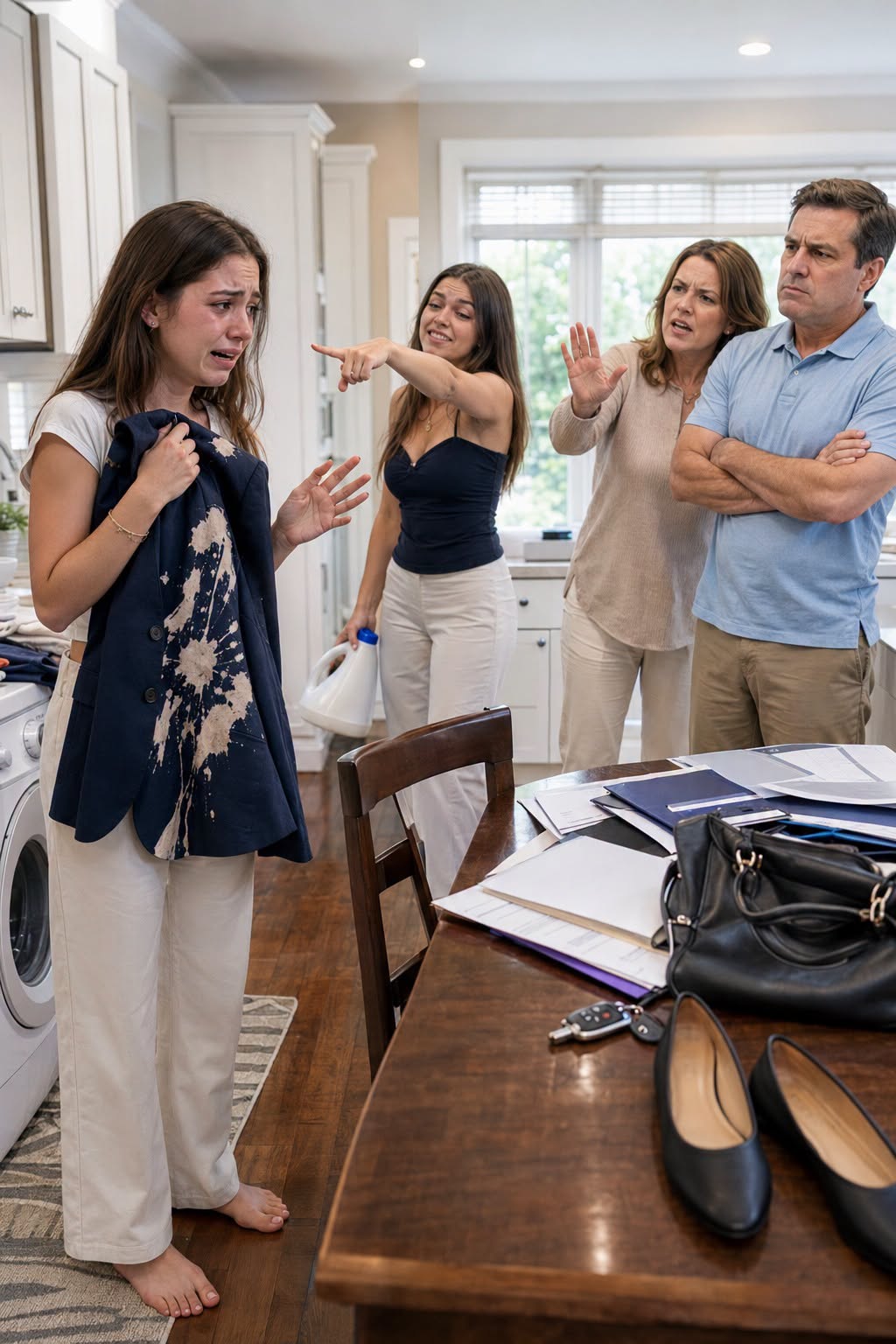
I know because I watched the numbers change on my phone while sitting on the edge of my bed, the blazer laid across my lap like something pulled from a fire. At first, I tried not to cry. I pressed my tongue against the roof of my mouth. I breathed through my nose. I told myself I was bigger than this, stronger than this, too close to the finish line to fall apart because Oriana had done what Oriana always did.
Then the first tear hit the pale mark on the lapel.
After that, I let it happen.
I cried for the blazer, yes, but also for every time I had been told to be understanding because Oriana was “sensitive.” For every birthday where my cake was smaller because she would make a scene. For every report card my mother glanced at before changing the subject to Oriana’s latest crisis. For every year I had believed if I worked hard enough, stayed quiet enough, became impressive enough, they would finally stop treating my life like something that could be interrupted.
Eleven minutes.
Then I stood up.
My hands were still shaking, but my brain had gone cold and practical. I steamed the blazer even though the stains would not lift. I used a lint roller. I trimmed one tiny frayed thread near the button. I put on my white blouse, black trousers, and the heels I had worn to every scholarship interview since college because they were the only pair that didn’t pinch before the third hour.
When I put the blazer on, I almost took it off again.
The bleach patches looked worse against the blouse. The left lapel had a pale streak like a fingerprint. The shoulder looked almost silver under the light. It announced damage before I could open my mouth.
I stared at myself in the mirror.
At twenty-five, I looked younger when I was tired. My dark hair was twisted into a low bun. My face was pale from lack of sleep. The blazer made me look like I had survived something on the way there.
Maybe I had.
Downstairs, my parents were speaking in low voices. They stopped when I entered the kitchen.
Oriana’s eyes widened, just a little. “You’re wearing that?”
I picked up my keys from the counter. “Yes.”
My mother frowned. “Marlowe, maybe you should find something else.”
“There is nothing else.”
“You can’t go to Yale looking like that.”
I looked at her for a long moment. “Then I’ll go looking exactly like this.”
My father shifted near the refrigerator. “Don’t make this into some statement.”
“It already is one.”
Oriana laughed. “Oh my God. You’re going to embarrass yourself.”
I walked past her chair, close enough to smell her strawberry shampoo and the artificial vanilla of her cereal. “Maybe.”
The laugh died in her throat.
Outside, the air was cold enough to sting. Frost clung to the windshield of my old Honda Civic, and the scraper made a harsh, scraping rhythm that steadied me more than any encouraging speech could have. My neighbor’s dog barked twice. Somewhere down the street, a garbage truck groaned and beeped.
I drove two hours to New Haven with the heater blowing too hot against my knees and my application folder on the passenger seat. The highway was gray. The sky was white. My phone buzzed once near Meriden.
A text from my mother.
Don’t tell anyone family business today.
I almost laughed.
Family business. That was what she called anything that made them look bad.
I did not answer.
At a rest stop, I parked and went into the bathroom to check my reflection. A woman in navy scrubs stood beside me washing her hands. She looked at my blazer in the mirror, then at my face. For a second, I braced myself.
Instead, she said, “Big interview?”
“Yes.”
“Medical?”
I nodded.
She pulled a paper towel from the dispenser. “Then walk in like you already belong there.”
I looked at her, surprised.
She smiled. “Patients don’t care if your jacket is perfect. They care if you stay when things get ugly.”
She left before I could ask her name.
I stood under the buzzing fluorescent light, listening to the hand dryer roar, and something in my chest loosened.
By the time I reached the Yale campus, the afternoon light had turned the buildings honey-colored. Students crossed the sidewalks in coats and scarves, carrying coffee cups and canvas bags, moving like they had always known where they were going. I parked three blocks away because I could not afford the garage. My heels clicked unevenly over the pavement. Every reflective window gave me another glimpse of the stains.
I kept walking.
Inside the admissions building, it smelled like polished wood, paper, and expensive heating. Seven other applicants sat in the waiting room. Navy suits. Black suits. Pearl earrings. Leather portfolios. One man had shoes so shiny I could see the lights in them.
A girl with a sleek ponytail glanced at my blazer, then looked away.
Another applicant whispered something to the person beside him.
I sat down, crossed my ankles, and placed my folder on my lap.
Do not shrink, I told myself.
The receptionist called three names. Then two more.
At 6:04 p.m., she looked up and said, “Marlowe Vesper?”
I stood.
The door at the end of the hall opened before I reached it. A tall older man with silver hair and rimless glasses stepped out holding a file.
His eyes moved from my face to my blazer.
Then to the name on the folder.
He did not smile.
He stared like he had found a missing piece of a puzzle he had been carrying for months.
May you like



“Wait,” he said quietly. “You’re her.”
And suddenly, the ruined blazer felt less like humiliation and more like a flare shot into the dark.







