Chapter 9
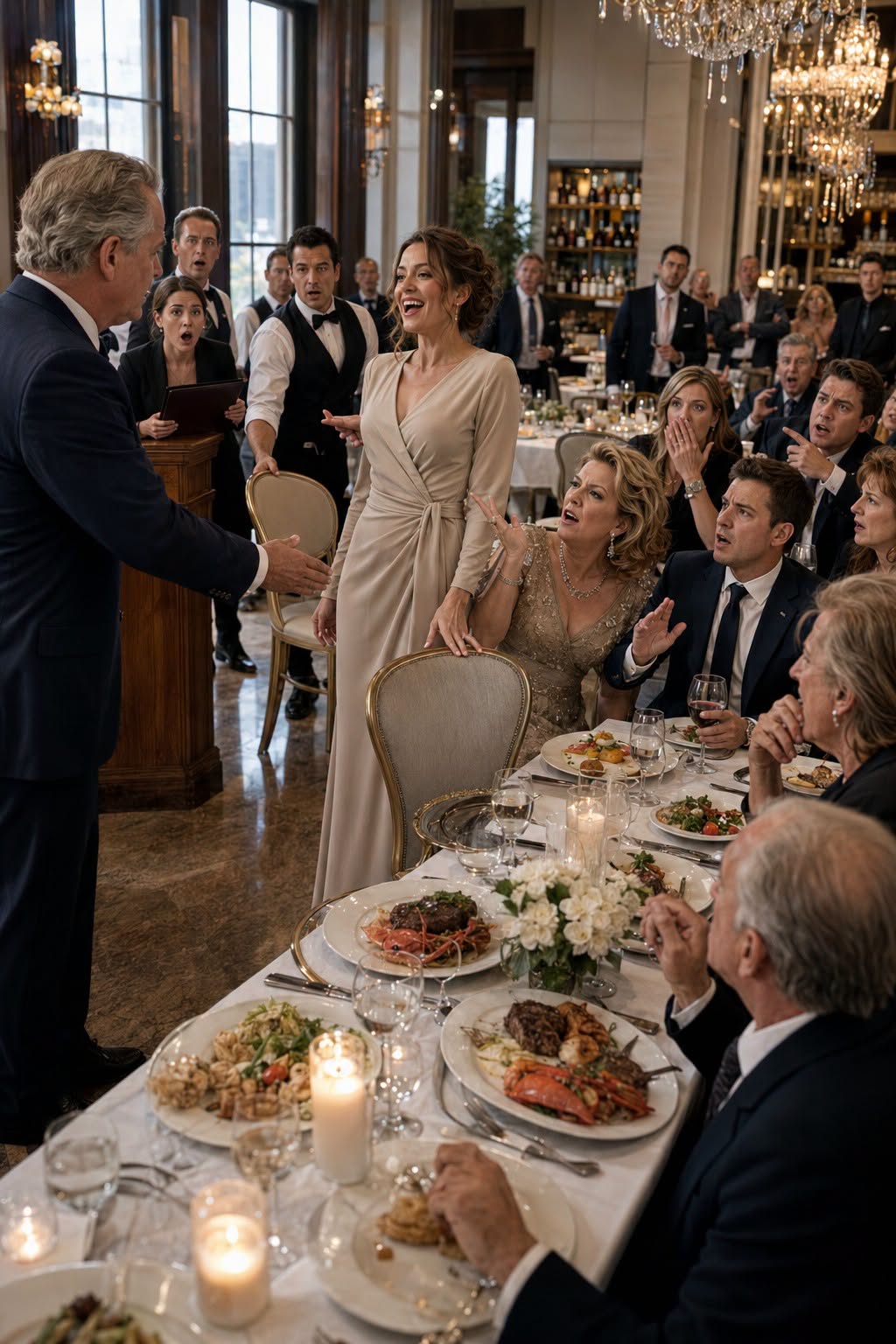
### Part 9
Two months later, I walked into the unfinished Dominion House flagship space wearing dusty boots, black jeans, and a hard hat with my name printed on the front.
Not Callan’s.
Mine.
The building was still mostly bones. Exposed beams. Open wiring. Concrete floors marked with tape. Plastic sheeting moved in the airflow like pale ghosts. The future dining room smelled of sawdust, primer, warm metal, and possibility.
Sunlight poured through the high windows facing downtown. Trucks groaned outside. A saw whined somewhere near the bar frame. Someone laughed from the mezzanine, and the sound echoed through the hollow room.
Maren Vale stood near the future host stand with rolled plans under one arm.
“You look happy,” she said.
“I look sleep-deprived.”
“That too.”
We walked the space together.
The main dining room would seat two hundred. The rooftop bar had a skyline view sharp enough to make investors use words like “destination.” The tasting room sat behind glass, intimate and quiet, where guests could watch the kitchen without pretending the food appeared by magic.
At the center of it all was the open hearth.
My hearth.
Vernon Pike would have hated the elegance and secretly loved the fire.
Arlo arrived late because service had run long at The Aurelia. He came through the construction entrance carrying coffee and wearing a denim jacket over a chef shirt.
“I brought the bad kind,” he said, handing me a cup.
“Gas station?”
“Naturally.”
“Perfect.”
Maren looked between us with a small smile and wisely said nothing.
Arlo had agreed to consult on the opening menu for the first six months. Not because I needed saving. Not because the story required a man to appear at the end with a new kind of love wrapped in better timing. He came because he was talented, loyal, and understood that kitchens are built by people who respect the work more than the applause.
That was enough.
Near the unfinished host stand, I noticed a small white card propped against a toolbox.
At first, I thought it was a contractor note.
Then I saw my name.
Juliana Kestrel
Owner
Below it, in Arlo’s slanted handwriting, was one line.
A chair only means something if the room believes you need permission to sit.
I stared at it for a long time.
My throat tightened.
“Too much?” Arlo asked.
I shook my head.
“No,” I said. “Exactly enough.”
That afternoon, my attorney called with the settlement update.
Callan had accepted terms.
He would retain his minority equity as a passive financial interest, stripped of management rights, public authority, employment title, and operational access. He would receive scheduled distributions if and when issued under the agreement. He would not represent himself as founder, owner, managing partner, or operational head of Kestrel Hearth Hospitality or any related project.
Cordelia had apparently fought that last clause.
Hard.
Gideon sounded almost amused.
“She objected to the phrase ‘not founder’ with impressive energy,” he said.
“What did Callan say?”
“He told her to stop.”
I looked across the construction site. A worker swept dust near the future bar. Arlo argued with a contractor about hood ventilation. Maren answered a call near the windows, sunlight catching the edge of her silver watch.
For a moment, I tried to imagine Callan saying no to his mother years ago.
At Thanksgiving.
At the anniversary party.
At The Aurelia.
I wondered what might have happened if he had stood when he saw there was no chair for me.
But then I stopped.
That version of life was not mine. Maybe it never had been.
“Finalize it,” I told Gideon.
Three weeks later, the divorce decree became official.
Cordelia sent one handwritten letter to my new apartment. The envelope was pearl gray. Of course it was.
I almost threw it away.
Instead, I opened it standing over the kitchen trash.
Juliana,
I hope one day you understand that mothers sometimes fight too hard for their children. I regret that the dinner became unpleasant. Callan is suffering. A kinder woman would not leave him this way.
No apology.
No ownership.
Just perfume sprayed over smoke.
I dropped the letter into the trash and took out the bag before the smell could settle.
That night, I cooked risotto in my small kitchen with the window open. Rain tapped the fire escape. The florist downstairs had left buckets of unsold flowers in the alley, and the whole apartment smelled like wet roses and garlic.
My phone buzzed once.
Callan.
I stared at his name.
Then I answered.
For three seconds, neither of us spoke.
“Jules,” he said finally.
His voice was quiet. Raw.
“I signed.”
“I heard.”
“I’m sorry.”
I stirred the rice slowly. Steam warmed my face.
There had been a time when those two words would have split me open. I would have searched them for proof, for rescue, for the man I wanted him to be.
Now they sounded like a glass of water handed to someone after the house had burned down.
“Okay,” I said.
He inhaled shakily. “That’s all?”
“What do you want me to say?”
“I don’t know. I thought maybe… maybe someday we could talk.”
“We are talking.”
“You know what I mean.”
I looked around my apartment. The crooked window. The thrift-store table. Vernon’s knife on the magnetic strip. The pot on the stove. The peace.
“Yes,” I said. “I know what you mean.”
He waited.
I did not rescue him from the silence.
Finally, he whispered, “Do you hate me?”
I turned off the burner.
“No,” I said. “I don’t carry you enough to hate you.”
The line went quiet.
Then he said, “Goodbye, Jules.”
“Goodbye, Callan.”
I hung up and finished dinner.
A month later, Kestrel Hearth opened its flagship restaurant inside Dominion House.
On opening night, I stood near the pass in a black suit instead of a chef coat, watching plates move under the warm lamps. The dining room glittered. Glasses caught light. Servers moved like choreography. The open hearth burned steady and bright.
Maren raised a glass from a corner table.
Arlo yelled, “Hands, please,” from the line.
Nola adjusted a server’s collar and threatened a printer with violence under her breath.
Everything smelled like smoke, butter, citrus, and clean linen.
Near the entrance, the host stand held a small brass-framed place card.
Juliana Kestrel
Founder
People noticed it.
Some smiled.
Some didn’t.
I did not need either.
At 8:15, a young hostess came to the kitchen entrance looking nervous.
“Chef?” she said.
Old instinct made me turn.
“Yes?”
“There’s a woman at the door asking for a table. Cordelia Voss.”
The kitchen quieted by half a breath.
Arlo looked at me.
Nola’s eyebrows climbed.
I wiped my hands on a towel and walked to the host stand.
Cordelia stood near the entrance in a cream coat, her silver hair perfect, her mouth tight. She looked smaller outside the mythology of her own table.
Behind her, through the glass doors, the city moved on without caring who she had once been.
“We’re fully committed tonight,” the hostess said politely.
Cordelia looked at me.
For the first time since I had known her, she did not look smug.
She looked hungry.
Not for food.
For access.
For relevance.
For a chair in a room that no longer belonged to her son.
“Juliana,” she said. “I was hoping we could speak.”
I looked at the dining room. Every table filled. Every chair taken. Every seat earned by reservation, work, timing, or grace.
Then I looked back at her.
“There’s a diner down the street,” I said. “It may suit you better.”
Her face went white.
I did not smile.
I did not laugh.
I did not wait for the room to applaud.
I simply turned and walked back toward the kitchen, where the fire was mine, the work was honest, and nobody had to remove a chair to prove who belonged.
That night, after the last guest left and the staff sat around eating family meal from mismatched bowls, Arlo placed the old white card beside my plate.
A chair only means something if the room believes you need permission to sit.
I read it again under the soft restaurant lights.
Then I folded it carefully and placed it in my wallet behind my grandmother’s photo.
Because the truth was simple.
Cordelia had not humiliated me by removing my chair.
She had done me the final favor of showing me the table had been set against me long before I arrived.
And once I saw that clearly, I stopped asking permission from people who had never planned to make room for me.
I built my own room.
May you like



Then I locked the door behind me.
THE END!







