Chapter 7
### Part 7
Arlo found me beside my car five minutes later, carrying a white takeout bag and wearing the expression of a man who had seen too many people pretend they were fine.
“You good?” he asked.
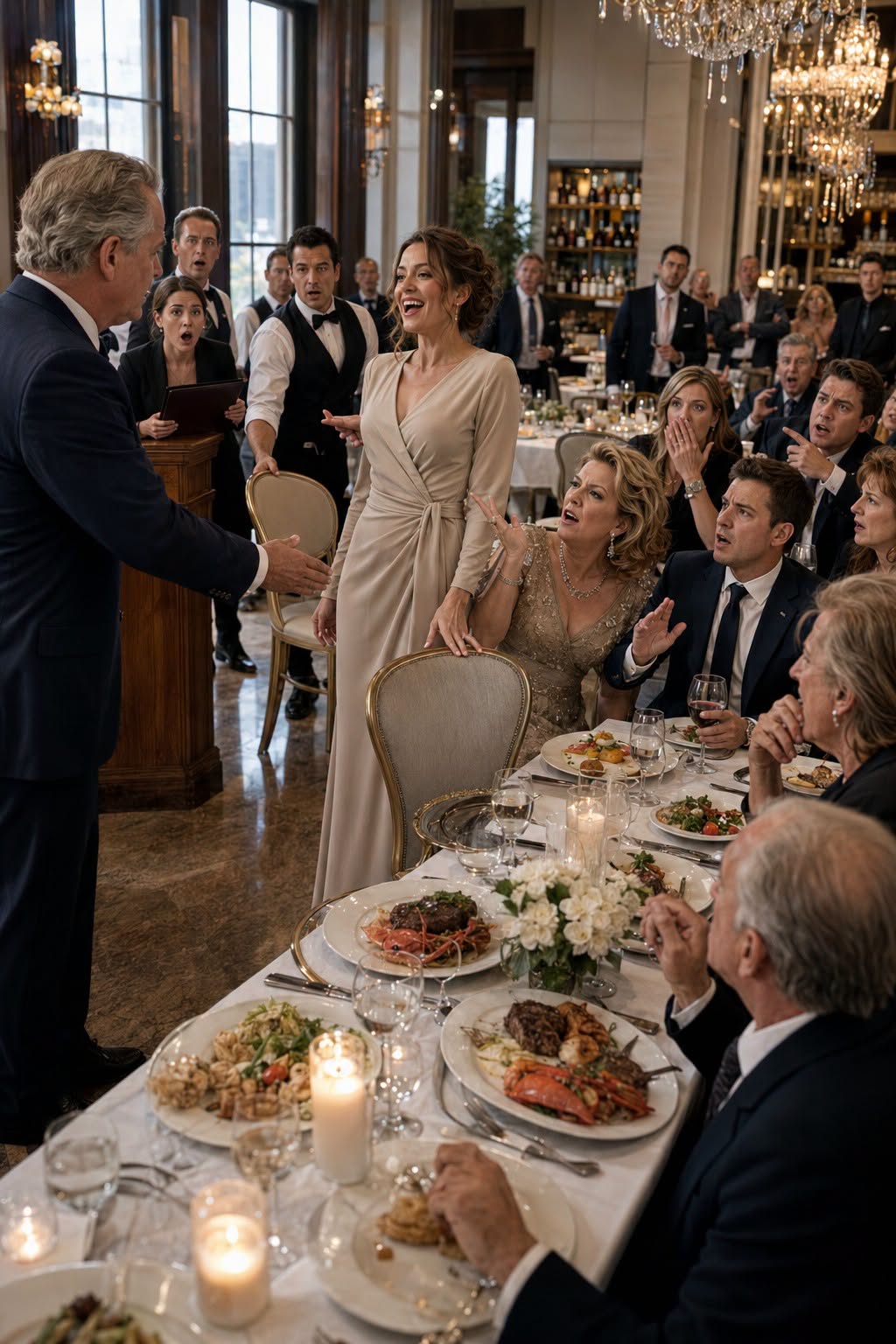
I looked at the restaurant windows. Through the glass, I could see movement at the Voss table. Cordelia standing. Hollis seated with his head bowed. Sable waving her hands. Callan nowhere visible.
“I’m good,” I said. “I just need a decent night’s sleep and a real estate attorney.”
Arlo almost smiled. “I packed scallops.”
“Keep them.”
“You sure?”
“Feed the staff.”
That made him smile for real.
“You always do that,” he said.
“What?”
“Leave hungry and make sure everyone else eats.”
I looked away before kindness found the crack again.
Arlo shifted the bag to his other hand. “For what it’s worth, I was twenty-two and one bad service away from quitting when you pulled me off the fry station and taught me how to break down halibut properly. You told me speed without respect was just panic.”
“I was bossy.”
“You were right.”
The word settled softly.
Right.
Not dramatic. Not flattering. Just right.
I wanted to cry then, but I had a long drive and expensive mascara, so I laughed instead.
“Go back inside,” I said. “Your dining room is bleeding.”
“Let it,” he said. “Some stains are educational.”
I shook my head. “Arlo.”
“Fine. But call me if you need anything.”
I got into my car, set the navy folder on the passenger seat, and drove home with the windows down and the radio off.
The city passed in fragments. Crosswalk lights. A man walking a golden retriever. Steam rising from a manhole. Couples leaving restaurants with leftovers and soft hands linked together. For years, I had thought leaving would feel like falling. Instead, it felt like stepping out of a room with bad air.
The house was dark when I arrived.
Our house.
Callan’s house soon, probably. I had never loved it. Cordelia had helped choose it, which meant every room looked like a hotel lobby pretending to be a family home. Pale rugs nobody could spill on. White sofas nobody could relax on. A dining table long enough to host people who did not like one another.
I changed into jeans and an old Lantern Rail T-shirt, then walked through the rooms with a legal pad.
Not sentimental things.
Practical things.
My knives. My grandmother’s earrings. The framed opening photo from our second restaurant. The ugly mug Vernon Pike had given me when I got into culinary school. My hard drives. My personal documents. The small cast-iron pan I bought at a flea market in Nashville.
Marriage ends in objects before it ends in court.
At 1:12 a.m., Callan came home.
I heard his key in the lock. The front door opened, then closed too softly. He found me in the kitchen wrapping knives in towels.
His tie was gone. His hair was messy. His face looked older.
“Jules,” he said.
I kept wrapping.
“Don’t take the knives,” he said.
I looked up.
Of all the things.
“These are mine.”
“I know.” His voice broke. “I just meant… if you take them, it feels final.”
I tied the towel around Vernon’s knife.
“It is final.”
He stood across the island from me, exactly where he had stood when the invitation arrived.
“Mom went too far,” he said.
I laughed once.
There it was. The emergency offering.
Not “I went too far.”
Not “I betrayed you.”
Mom.
“She removed a chair,” I said. “You removed my name.”
He flinched.
“I was under pressure.”
“From your mother?”
“From everything.” He rubbed his face. “You don’t understand what it was like, Jules. Everyone looking at me like I had to be the man who saved the family name.”
“And I was what? The ladder?”
His eyes reddened. “I loved you.”
That almost made me angry.
“Don’t use past-tense love as a broom,” I said. “You don’t get to sweep betrayal under it.”
He gripped the edge of the island.
“I never meant for it to go this far.”
“But you meant for it to go somewhere.”
Silence.
There it was again. The truth, refusing to be decorated.
I placed the wrapped knife in a box.
“Were you going to let Bram take operations?” I asked.
He looked down.
My chest tightened.
“Answer me.”
“I thought maybe you’d train him.”
The words were soft.
They struck like glass.
“You thought I would train my own replacement.”
“I thought we could restructure.”
“No. You thought I would keep working while your family took the room.”
He wiped at his eyes, and I hated that part of me still noticed.
“Jules, please. We can fix this.”
“No, Callan. You can survive this. That’s different.”
He came around the island.
I stepped back.
“Don’t make me the villain,” he said.
That was the first honest selfish thing he had said all night.
I looked at him carefully.
“You made me the help in my own life,” I said. “I’m not making you anything.”
He stopped.
The house hummed around us. Refrigerator. Clock. Distant traffic. All the ordinary sounds that continue after extraordinary damage.
I carried the box to the mudroom.
Callan followed, desperate now.
“What do you want from me?”
I turned at the door.
That question once would have opened a flood inside me. I would have listed respect, honesty, partnership, my name spoken correctly in public, his hand reaching for mine when his mother sharpened her voice.
But wanting is dangerous when someone has already shown you what they do with what you give them.
“Nothing,” I said.
He stared at me.
“That’s not true.”
“It is now.”
I left with two boxes and one suitcase.
Behind me, Callan said my name again.
Not “Chef.”
Not “founder.”
Not “partner.”
May you like



Just “Jules,” soft and broken in the doorway of a house I no longer needed permission to exit.
I did not turn around.







