Chapter 3
### Part 3
When I was sixteen, I learned that kitchens tell the truth faster than people do.
A dining room can lie. It can dim the lights, polish the forks, hide the stains under linen, and call a bad night “unfortunate.” But a kitchen has no patience for performance. If the fish is old, it smells old. If the sauce breaks, it breaks. If someone cannot carry their weight, everybody knows before the first hour of service is over.
My first kitchen was at a roadside diner called The Lantern Rail, wedged between a tire shop and a coin laundry near the interstate. The sign buzzed at night. The floor always smelled faintly of bleach, fryer oil, and wet cardboard. The air conditioner worked only when the weather didn’t require it.
I started as a busser because my mother’s second husband had decided groceries were “not his responsibility,” and I needed money that came every Friday.
The head cook was a man named Vernon Pike. He had white hair, forearms like old rope, and the permanent squint of someone who had spent too many years under fluorescent lights. For three weeks, he said almost nothing to me except, “Behind,” “Move,” and “Don’t stack plates like a raccoon.”
Then one night after closing, when the rain came down so hard it sounded like gravel thrown at the roof, Vernon slid a knife across the prep table toward me.
It was not beautiful. The handle was worn smooth. The blade had been sharpened so many times it looked tired.
“You don’t flinch,” he said. “That’s half the job.”
I stared at the knife. “What’s the other half?”
“Knowing when to leave a room that thinks you’re lucky to stand in it.”
At sixteen, I thought he meant kitchens.
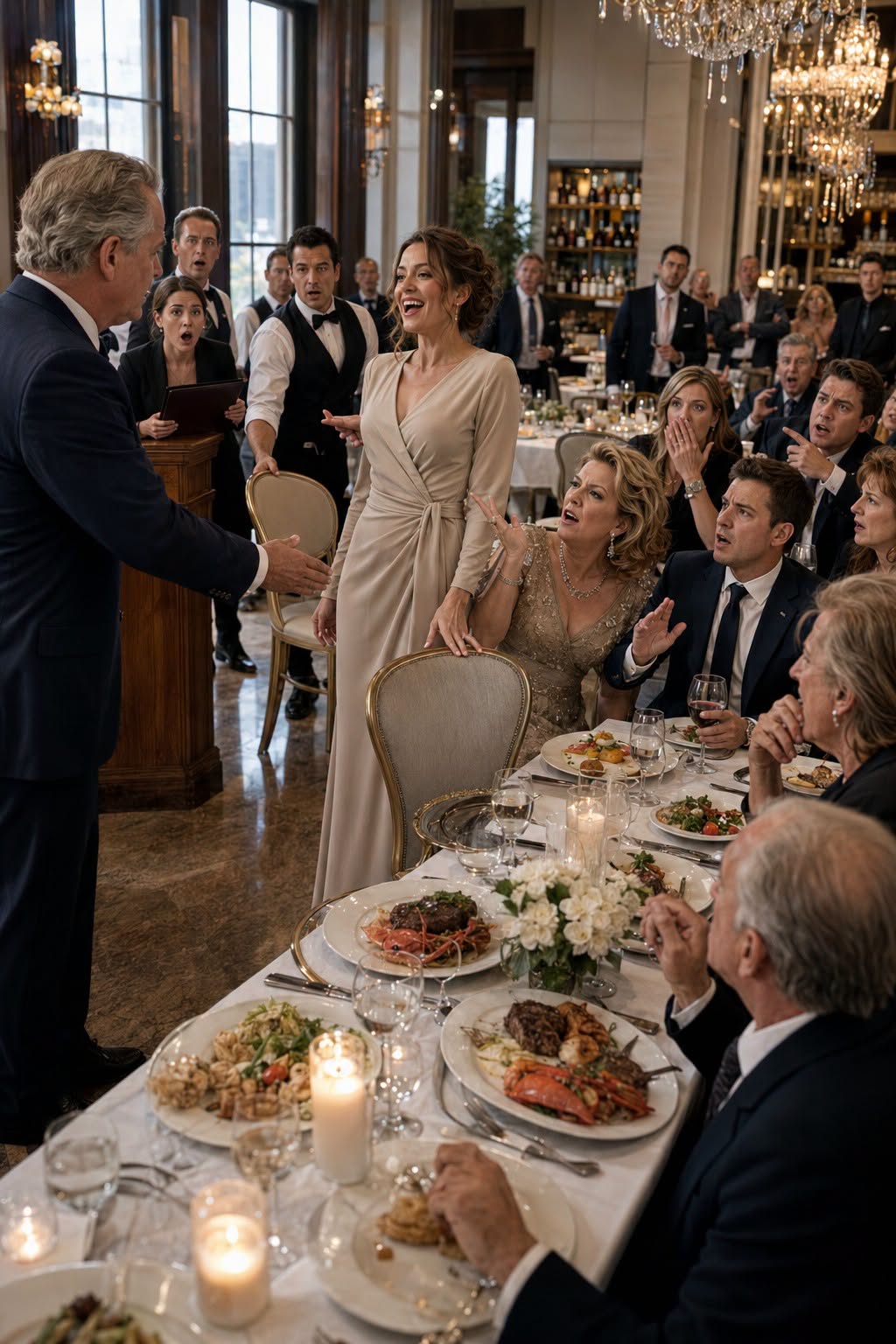
At thirty-four, standing in The Aurelia with Cordelia Voss glaring at me across a table she had set without my chair, I finally understood he meant life.
I carried Vernon’s knife through culinary school, through my first sous-chef position, through three restaurant openings, and through the years when I discovered I was better at building kitchens than being celebrated inside them.
I liked systems. Vendor contracts. Labor models. Menu engineering. Health code compliance. The boring bones that kept beautiful rooms alive. People loved to praise the person who walked through the dining room in a good suit. They rarely asked who negotiated the produce bill down twelve percent without hurting quality, or who rewrote the scheduling model so dishwashers stopped quitting every two weeks.
I met Callan Voss in a failing cocktail bar called Saint Mercy.
He was twenty-nine, handsome in a careless way, with dark hair that fell over his forehead and a voice that made customers forgive slow service. The bar was three months from closing. Its lease was poison, its liquor costs were insane, and the cocktail program had been copied badly from a magazine.
I came in as a consultant for what was supposed to be a two-week rescue.
On the first night, I found Callan arguing with a bourbon supplier near the storage room.
“This isn’t my fault,” he said when I introduced myself. “The concept is good. The market just doesn’t get it.”
“The market gets math,” I said.
He blinked.
By Sunday, I had renegotiated the lease escalation, replaced two suppliers, cut the cocktail list from thirty-one drinks to twelve, retrained the bartenders, and changed the lighting so the place stopped looking like a dentist’s office with whiskey.
Three months later, Saint Mercy was profitable.
Six months later, Callan asked me to dinner.
He was charming then. Maybe because he was grateful. Maybe because I was still useful in a way that felt romantic to him. He would watch me write cost projections on napkins and say, “You see the world like a blueprint.”
I loved that he noticed.
I did not notice what he left out.
When I founded Kestrel Hearth Hospitality at twenty-five, it was just me, one part-time bookkeeper, and a laptop that overheated if I opened too many spreadsheets. I built small restaurant groups for owners who had taste but no structure. Eventually, I began taking equity instead of flat fees. Then I acquired my first struggling property. Then my second.
By the time Callan and I got engaged, the company was no longer a consulting hustle. It had revenue. Staff. Contracts. A future.
And I had a problem.
I hated being the face of anything.
I could walk into a kitchen and command it with a glance, but cocktail hours with investors made me feel like my skin didn’t fit. Callan loved those rooms. He knew how to laugh at the right volume, touch a shoulder, remember a son’s lacrosse injury, make wealthy men feel clever for repeating things I had told him in the car.
So I gave him a public role.
Not ownership.
Not control.
A role.
My attorney, Gideon Vale, insisted on clarity.
“Affection makes people careless,” he told me in his office, sliding the operating agreement across his desk. “Paperwork exists because love does not always stay honest.”
I laughed then.
I thought he was being dramatic.
Callan signed the agreement without reading the whole thing. He kissed my temple afterward and said, “Whatever makes you feel safe.”
That sentence felt sweet at the time.
Later, I understood it meant he thought my safety was decorative.
Cordelia Voss entered my life like perfume sprayed over smoke. She had old silver, old manners, and an old resentment toward anyone who had built what she had lost. The Voss family had once had money, real money, before Callan’s father sank most of it into a waterfront development that never made it past lawsuits and mud.
Cordelia kept the manners after the fortune thinned.
She wore pearls to grocery stores and called debt “temporary illiquidity.” She corrected waiters in restaurants she could not afford and spoke of “our standards” as if standards paid property taxes.
From the beginning, she treated me like an appliance Callan had married.
Useful. Unattractive to discuss. Best kept out of formal photographs.
At our first Thanksgiving, she introduced me to a cousin as “Callan’s little restaurant helper.”
At our engagement party, she moved me to the edge of a family photo, then posted the cropped version.
At our second anniversary dinner, she told the caterer, “Juliana is comfortable in kitchens. She won’t mind checking on the trays.”
Callan always sighed afterward.
“She’s from a different generation,” he said.
“She’s fifty-eight.”
“You know what I mean.”
Yes.
I knew what he meant.
He meant, “Please keep making my life easier by swallowing what hurts you.”
May you like



And for years, I did.
Until the invitation arrived.







