Chapter 27 - The End
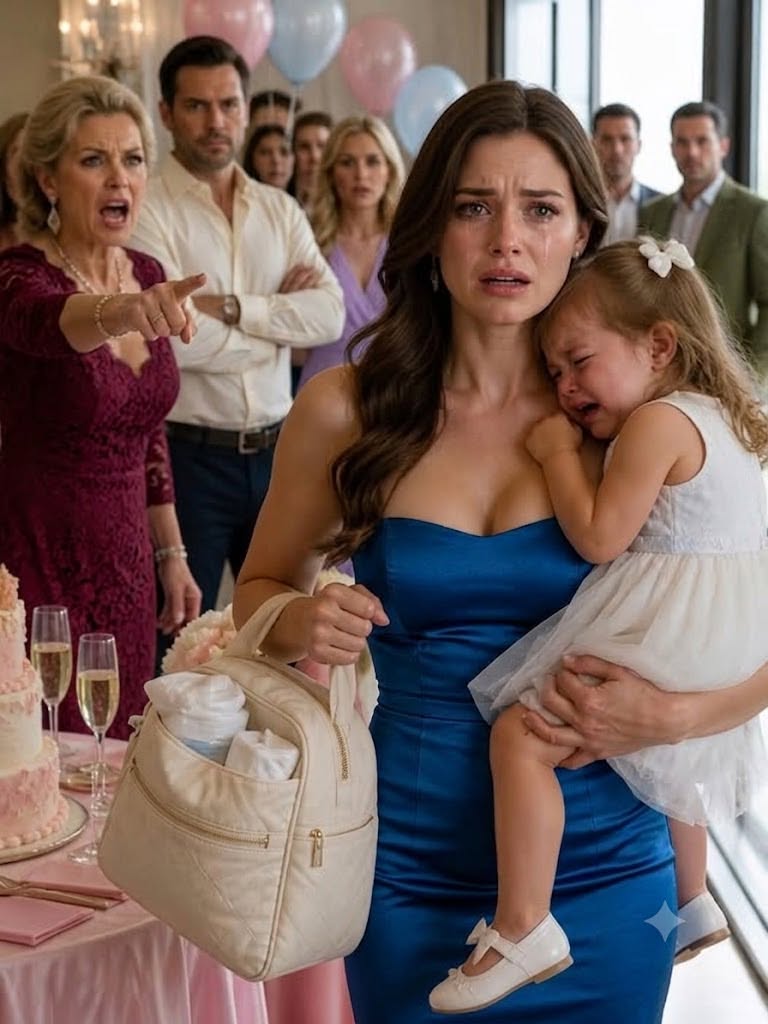
Three years after Arthur slapped my two-year-old daughter beside a yellow ribbon, I was thirty-five.
Gigi was five.
Arthur was thirty-nine.
Victoria was sixty-four.
Charles was sixty-seven.
Nobody had gone to prison.
Nobody lost everything.
Nobody became poor.
Nobody vanished.
That was not failure.
That was reality.
Arthur completed probation without another incident.
He continued therapy after the court no longer required it.
He never regained executive control at Whitmore House Interiors.
He kept his shares.
Received dividends when everyone else did.
Worked elsewhere.
Built a professional reputation on a smaller scale.
He never asked me to hide his conviction from Gigi when she got older.
That mattered.
Our relationship remained distant.
Birthday texts.
Hospital waiting rooms.
Shareholder meetings.
Occasional family logistics.
No holidays together with Gigi by year three.
Maybe someday.
Maybe not.
I stopped requiring myself to know.
Victoria saw Gigi approximately once every six weeks.
Usually with me.
Later, sometimes with Charles for short visits while I remained nearby.
Never alone overnight.
Not because I had declared:
never.
Because no one needed it.
Trust did not need to return to its old shape to count as real.
Victoria learned to ask.
“Can I give her candy?”
“Can I take her outside?”
“Can I post this photo?”
“Can I invite her next Saturday?”
At first, the questions sounded awkward.
Then normal.
Charles had an easier time with boundaries because distance had always been his language.
His work was learning to act before a crisis ended.
At Gigi’s fifth birthday, a boy shoved another child near the swings.
Charles was the closest adult.
Old Charles might have waited for a parent.
He stepped in.
Separated them.
Checked the child who fell first.
Then found the other parent.
Small.
I noticed.
He noticed me noticing.
Neither said anything.
That was apology through behavior.
My relationship with my parents never returned to:
drop by whenever.
No house key.
No automatic Sunday dinner.
No expectation that every holiday belongs to them.
We planned.
Sometimes I said no.
The first Christmas I spent only with Gigi and friends, Victoria cried.
I did not change plans.
She survived.
The next year, we went to their house for brunch.
Choice.
Not command.
That was healthier than the old closeness.
My diversion disappeared after successful completion.
I did not tell the story as:
I kicked my mother because she deserved it.
She had defended someone who slapped my child.
I was furious.
I kicked her after the immediate danger had passed.
That was wrong.
Both facts remained.
Years later, Gigi once asked why Grandma Victoria had a small scar? She did not have scar. Better: why Mom and Grandma “used to fight.” I told her:
“Grandma made a bad choice. I made one too.”
“Same?”
“No.”
Children need accurate responsibility, not fake symmetry.
“Different choices. Different consequences.”
She accepted.
The financial side of the family became boring.
That may have been the greatest success.
Independent chair.
Outside CFO.
Expense policy.
Related-party approvals.
No founder club bills hidden in vague categories.
No Arthur approving his own reimbursements.
No Clara emailing banks at midnight because she was enraged.
The $1.1 million refinancing performed as planned.
Debt declined.
Warehouse stayed.
Employees worked.
Whitmore House Interiors no longer felt like a family nervous system disguised as a corporation.
At the third-year annual meeting, Susan Bell—still very much alive and more terrifying than any relative—asked management why a showroom renovation exceeded budget by nine percent.
Marcus answered.
No one said:
Dad approved it.
Mom knows.
Arthur handled it.
Clara will cover.
Documents.
Numbers.
Adults.
Celine? No. Different story.
My father once whispered:
“Your grandfather would hate this.”
I replied:
“He’s dead.”
Charles almost laughed.
Then did.
We had finally stopped letting dead founders vote.
I kept my consulting firm.
Small.
Four employees.
No family members.
Intentional.
One employee asked whether Gigi would inherit it.
“She can inherit whatever ownership I still have someday.”
“Will she run it?”
“If she grows up and becomes exceptionally interested in cash-flow forecasts, I’ll seek medical help.”
That became an office joke.
I wanted my daughter to inherit options.
Not roles.
Gigi had no lasting physical injury from Arthur’s slap.
No hearing problem.
No dental injury.
No facial scar.
Emotionally, she did not retain a clean narrative memory by age five.
She knew there had been:
“a bad birthday.”
Fragments.
Yellow.
Crying.
Mom holding her.
Therapists advised not filling memory gaps for dramatic closure.
Good.
She would learn more when age appropriate.
Not through family gossip.
Not through a viral story.
Through me.
Arthur’s responsibility would not be hidden.
Neither would mine.
At five, she needed less.
She needed to know:
Adults are not allowed to hit you because they are angry.
If an adult hurts you, tell me.
You never have to apologize for someone else hurting you.
And:
Mommy also has rules.
No kicking people because you are furious once you are safe.
She liked that one less.
The most difficult change in me was learning not to scan every room.
For the first year after the party, whenever an adult corrected Gigi, my body reacted.
Preschool teacher:
“Gigi, please sit down.”
My shoulders tightened.
Friend’s mother:
“No touching the cake yet.”
My stomach tightened.
A man in a grocery store said:
“Careful, sweetheart.”
I turned too quickly.
Hypervigilance can pretend to be devotion.
It is still exhausting for children if allowed to lead.
Dr. Pierce told me:
“Gigi needs to learn many adults can set safe limits.”
I knew.
“Then stop treating every limit as the beginning of Arthur.”
Painful.
Necessary.
So I practiced.
At five, Gigi once grabbed frosting from another child’s cupcake.
The child’s father said:
“Hey, that’s not yours.”
Gigi froze.
I watched.
He did not grab her.
Did not shame.
Simply moved the cupcake.
I said:
“Gigi, apologize.”
She did.
No rescue.
No fight.
Boundary.
Safe.
That ordinary distinction took me years.
Victoria also had to learn it from the other side.
At one supervised visit, Gigi threw crayons onto the floor.
Victoria looked at me.
“What?”
“Can I tell her to pick them up?”
I almost laughed.
“Yes.”
Victoria:
“Gigi, pick up the crayons, please.”
“No.”
I waited.
Victoria waited.
No:
spoiled.
No:
Arthur was right.
No:
you need discipline.
Just:
“I’ll wait.”
Gigi sighed dramatically.
Picked them up.
Victoria whispered afterward:
“I feel ridiculous asking permission to be a grandmother.”
“You’re not asking permission to exist. You’re checking the boundary because history exists.”
She nodded.
That sentence hurt her.
Still true.
Eventually she stopped needing to check every small thing.
Trust created a little room.
Not total authority.
Enough.
My relationship with Natalie deepened after the party because she had done something deceptively simple.
She told the truth when it became inconvenient.
Several relatives tried to soften their statements after Charles began calling.
Natalie did not.
Arthur’s lawyer asked whether she disliked him.
“Yes.”
“Could that bias you?”
“Probably.”
“Did it change what you saw?”
“No.”
That answer impressed me.
Witnesses can have feelings.
Truth does not require emotional emptiness.
After the case ended, Natalie apologized for years of staying silent about smaller incidents.
I asked:
“Why?”
“Because I thought your family was just intense.”
“So did I.”
“Until Gigi?”
“Until Gigi.”
We both understood.
Children sometimes reveal systems adults learned to normalize.
That does not mean children exist to save adults.
It means adults should have noticed sooner.
The phrase:
“everyone is going to pay”
embarrassed me later.
It sounded like revenge.
At the moment I said it, I wanted revenge.
I wanted Arthur arrested.
My parents humiliated.
The company stripped from him.
Every relative who stayed silent ashamed publicly.
I wanted a giant consequence big enough to match Gigi’s scream in my head.
That did not happen.
Something better did.
Everyone paid only for the parts that belonged to them.
Arthur paid criminal and professional consequences for his aggression.
Victoria paid with lost trust and lost automatic access for protecting him.
Charles paid with board authority and the knowledge that his neutrality had never been neutral.
The company paid higher interest because weak governance creates risk.
I paid for my kick through diversion.
I paid for my reckless bank email through embarrassment, correction, and the temporary distrust of people who had to wonder whether I could separate personal anger from fiduciary duty.
Relatives who lied lost credibility.
Relatives who told the truth kept mine.
No single grand punishment.
Accurate costs.
That was healthier.
At Gigi’s fifth birthday, after the children had eaten cake and half the balloons had escaped toward the ceiling, Victoria stood near the patio table.
Not the old house.
My backyard.
My rules.
She was helping stack paper plates.
Gigi ran past holding a long yellow ribbon.
It trailed behind her.
Victoria saw it.
For one second, both of us froze.
The memory existed between us.
Gigi did not notice.
She tied the ribbon around a stuffed rabbit.
Then shouted:
“Grandma!”
Victoria looked at her.
“What?”
“Hold Bunny.”
Victoria took the rabbit.
The ribbon dragged over her wrist.
She looked at me.
I nodded.
Not permission.
Recognition.
We were okay.
Enough.
Later Charles left.
Victoria followed.
Gigi hugged them both.
Her choice.
Arthur’s telescope sat near the back door still boxed because assembly required an adult with more patience than I had during a birthday party.
Gigi pointed.
“Tonight moon?”
“Tomorrow.”
“Tonight.”
“Tomorrow.”
“Mean Mommy.”
“Correct.”
Safe disappointment.
She ran away.
I cleaned the patio.
Yellow ribbon everywhere.
One strand caught around the leg of a chair.
I bent to untangle it.
For a second I saw two-year-old Gigi again.
White dress.
Small hand reaching.
Arthur moving.
The slap.
My mother defending him.
My father crossing his arms.
My own foot connecting with Victoria.
Then the memory passed.
The ribbon was plastic.
Nothing more.
I threw it into the trash.
Not because I wanted to erase what happened.
Because the party was over.
That night Gigi woke around 1:40.
“Mommy.”
I went in.
“Bad dream?”
She nodded.
“What happened?”
“Cake fell.”
Children’s nightmares are not obligated to respect narrative symbolism.
“Scary.”
“Yes.”
I lay beside her for a minute.
She touched my face.
“Grandma came birthday.”
“Yes.”
“Grandpa.”
“Yes.”
“Arthur no.”
“No.”
“Why?”
“We talked about that.”
“He hurt me when baby.”
“Yes.”
“Still mad?”
There.
Am I still mad?
“Yes, sometimes.”
“Forever?”
I thought.
“I don’t know.”
She yawned.
“Can he be nice now?”
“Maybe.”
“Then why no?”
Because change and access are not the same.
Because adults can improve and boundaries can remain.
Because forgiveness does not erase history.
Too much for one-forty in the morning.
So I said:
“Because Mommy’s job is to decide what feels safe for you now, not what might be safe someday.”
She considered for approximately two seconds.
Then:
“Water.”
Of course.
I got water.
She drank.
Lay down.
I tucked the blanket.
“Mommy?”
“Yes?”
“You choose me?”
My heart tightened.
That sentence belonged to another family pattern.
Choose Arthur.
Choose peace.
Choose parents.
Choose child.
I did not want to give her the same hierarchy in reverse.
“I choose to take care of you because I’m your mom.”
She frowned.
“Same.”
“Not exactly.”
“I sleepy.”
“Goodnight.”
She closed her eyes.
I sat beside her.
The room was quiet.
Three years earlier, I thought protecting my child meant becoming the strongest person at the party.
I was wrong.
Strength was leaving.
Reporting.
Telling the truth.
Accepting my own consequence.
Refusing financial revenge.
Building systems that did not depend on family loyalty.
Letting my mother change without pretending change erased the past.
Letting my brother remain human without giving him access he had not earned.
Letting Gigi grow without turning one slap into the organizing story of her childhood.
And learning that sometimes the strongest sentence in a family is not:
Everyone is going to pay.
It is simply:
No.
No, you may not hit her.
No, love does not excuse it.
No, family does not hide it.
No, money does not erase it.
No, an apology does not automatically restore access.
No, anger does not give me permission either.
And sometimes:
Yes.
Yes, Grandma may come to the museum.
Yes, Grandpa may come to the birthday.
Yes, Arthur may send a card.
Yes, Gigi may touch the ribbon.
Yes, life may become ordinary again.
I turned off her lamp.
Left the door open a few inches because she liked hallway light.
Then I walked downstairs.
One yellow balloon still floated near the ceiling.
I grabbed the string.
Pulled it down.
Nothing happened.
No one shouted.
No one struck anyone.
No guest decided whether to intervene.
Just a balloon at the end of a long day.
I tied it to the back of Gigi’s chair so she would find it in the morning.
May you like



Then I went to bed.
The End







