part 10
PART 10
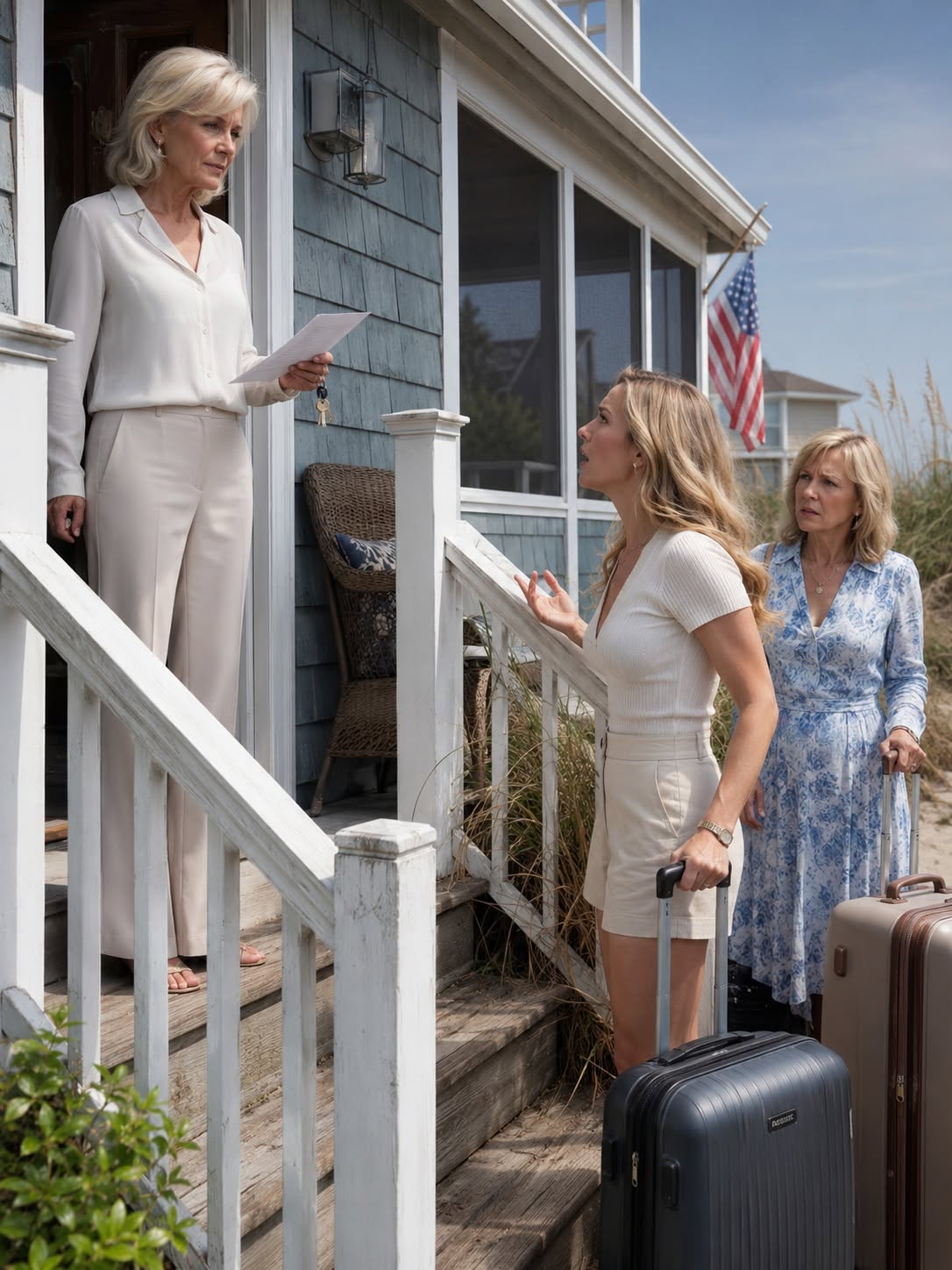
Roland and Vivian moved out twenty-six days later.
Not gracefully.
Not quietly.
But completely.
Roland told relatives he was downsizing.
Vivian said the house had become too difficult to maintain.
I let them have those lies for three weeks.
Then Aunt Marlene posted a photo of the house with the caption, “Sad that Seraphina forced her parents out of the family home.”
I replied with one sentence.
“The deed, mortgage records, and trust documents say otherwise.”
Then I posted nothing else.
Truth does not need a thread when the right people already have copies.
The calls came for two days.
Then stopped.
Thomas had sent the signed statement to every necessary party.
The vendors removed my name.
The venue demanded payment from Celeste.
The florist canceled the orchid wall.
The rehearsal dinner disappeared.
For a while, I thought Celeste would hate me forever.
She did not.
She postponed the wedding.
Then downsized it.
Then sold the custom gown.
Then called me one Tuesday afternoon and asked if she could meet for coffee.
I almost said no.
Then I remembered what I had told her.
Behavior.
Not tears.
So I went.
Celeste arrived without Vivian.
Without Roland.
Without excuses.
She placed an envelope on the table.
Inside was a check.
Small compared to what had been taken.
Large for her.
“What is this?” I asked.
“The first repayment.”
Her voice shook.
“For the wedding charges I benefited from.”
I looked at the check.
“You don’t have to perform guilt for me.”
“I’m not.”
She swallowed.
“I’m trying to learn the cost of things.”
That was the first honest sentence she had ever given me.
I accepted the envelope.
Not because I needed the money.
Because she needed to begin somewhere real.
Her wedding happened the following spring in a public garden.
No chandelier.
No imported orchids.
No family estate.
No lie.
I attended.
Not as sponsor.
Not as savior.
As a guest.
Roland did not speak to me that day.
Vivian cried when she saw me, but I no longer walked toward tears as if they were instructions.
Celeste hugged me at the reception.
“I know this doesn’t fix it,” she whispered.
“No,” I said.
“But it doesn’t make it worse.”
That was enough for that day.
As for the house, I changed it slowly.
I took down the portraits that had watched me shrink.
I replaced the heavy curtains.
I turned Roland’s office into a library.
I moved my chair from the end of the dining table to the middle.
A house should not have a throne.
It should have a place to breathe.
On the first rainy night after they were gone, I cooked dinner for myself.
Simple pasta.
One glass of red wine.
No demands.
No fork slammed beside a chicken plate.
No one telling me what I would pay.
I sat by the window and listened to the rain.
For the first time in my life, the house did not feel like a family obligation.
It felt like shelter.
It felt like my grandmother’s promise finally becoming real.
Years later, people still told the story of the night Roland Vale ordered his eldest daughter to pay for her sister’s wedding.
They loved the black folder.
The rainy window.
The roast dinner.
The mother clutching her chest.
The sister whispering, “What is that folder?”
And the daughter saying, “Proof this was never your family home.”
But the real story was not about a deed.
It was about a woman who stopped paying rent inside a family that had never given her a room.
It was about a folder full of receipts becoming louder than a father’s voice.
May you like



It was about the quiet daughter standing up at the table and discovering the house had been hers all along.
And from that night forward, so was her life.







