Chapter 5
### Part 5
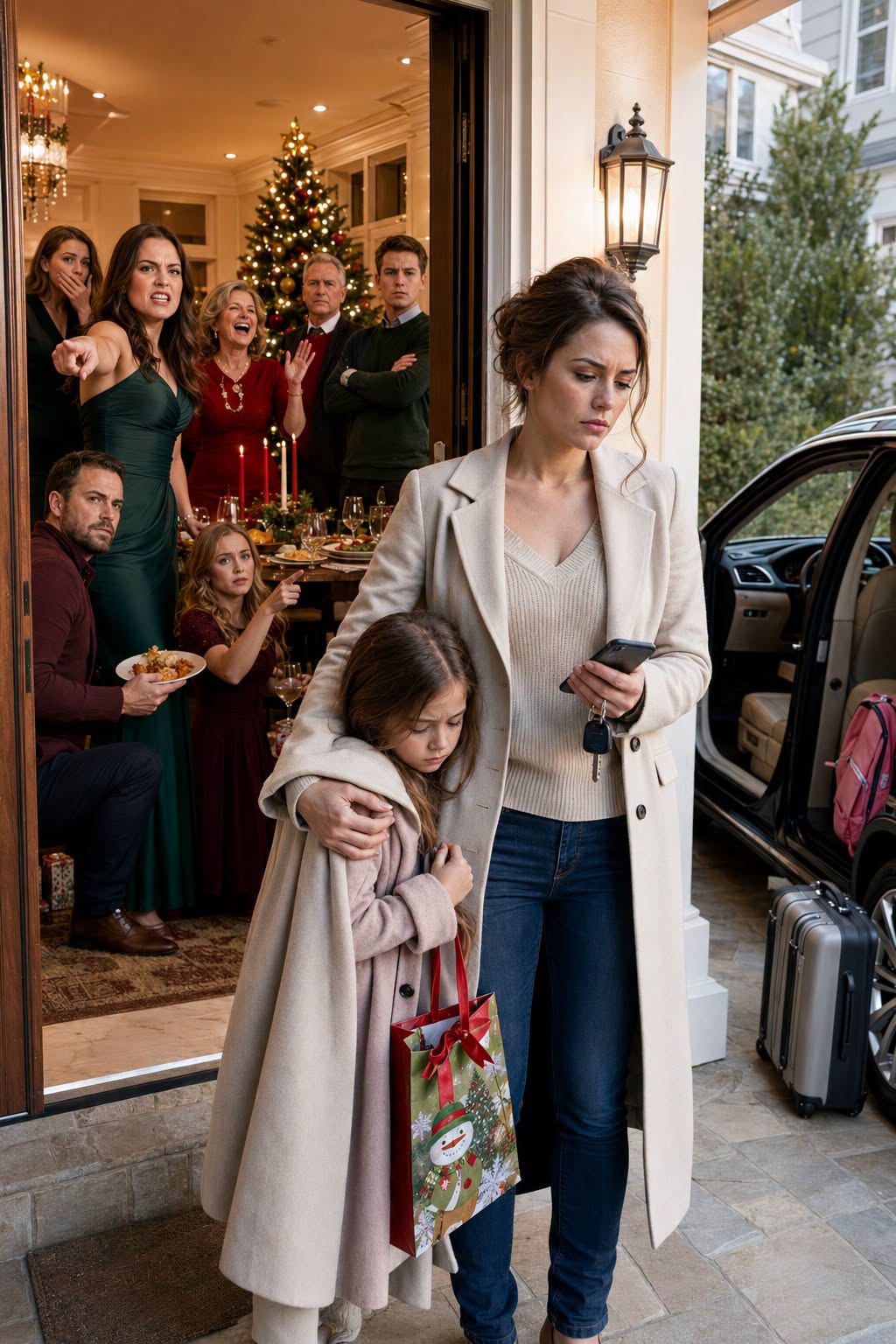
My attorney’s name was Odessa Flint, and she had the calmest voice of anyone I had ever paid to scare people.
She had handled the final settlement paperwork after Callum’s accident, and from the first day, she had treated me like a person instead of a tragedy with a signature line. When I sent her the doorbell footage, she called within twenty minutes.
“Maren,” she said, “do they have regular access to your daughter?”
“No.”
“Do they pick her up from school? Babysit? Emergency contact list?”
“My mother is on the school form from before Callum died.”
“Remove her today.”
I did.
Then Odessa sent a formal no-contact letter.
Not dramatic.
Not emotional.
Just firm enough that my father stopped texting commands and started texting nothing.
For three days, silence settled over my life like fresh snow.
Wren and I cleaned the house. We took down the few Christmas decorations that felt sad and left up the ones that still felt like ours. Callum’s stocking stayed on the mantel. Wren said she wanted it there.
On New Year’s Eve, we made pizza, spilled flour on the counter, and watched fireworks from our tiny back porch. At midnight, Wren leaned against me and said, “This year feels quieter.”
“Is that bad?”
She shook her head. “No. I can hear myself think.”
That sentence became my compass.
January brought bills, cold rain, and the first real breath I had taken in months. The settlement was not lottery money. It was not joy. It was the financial shadow of losing Callum, and every dollar carried the shape of what Wren and I no longer had.
But it gave us options.
I paid off our debts. I set up a trust for Wren. I moved part of the money where even guilt could not touch it. I hired a financial advisor who wore plain sweaters and explained things without making me feel foolish. I kept freelancing, but I stopped taking clients who paid late and called it “exposure.”
The more stable our life became, the more unstable my family’s story looked.
Without my money, my parents’ house went from “temporary stress” to “urgent situation.” My father had borrowed against it twice. My mother’s generosity had apparently involved credit cards, store accounts, and a level of denial that could have powered a small city.
Talia and Beckett were worse.
The foreclosure notices were real. The private loan was real. Beckett’s business had not failed because of the economy, bad partners, or poor timing. It failed because he liked the sound of being an entrepreneur more than the work of becoming one.
Still, none of that would have touched me if they had not tried to drag Wren into the cost of their choices.
In February, my mother sent a letter.
Odessa told me I did not have to read it.
I did anyway.
Her handwriting looked fragile, which annoyed me because it made me remember being little and watching her write labels on Christmas gifts.
“Maren, I am sorry you felt hurt.”
I stopped there.
Not “I hurt you.”
“You felt hurt.”
I folded the letter and put it in a folder marked “Do Not Reopen Without Coffee.”
A week later, Talia emailed me.
Subject line: “For the children.”
She wrote about Mason and Eli. About changing schools. About how confused they were. About how family conflict should never affect innocent kids.
I stared at that line for a long time.
Then I replied with two sentences.
“Wren was innocent too. Do not contact me again.”
She did not answer.
But Beckett did.
He sent one message from a new number.
“You’re enjoying this.”
I blocked it.
The truth was, I did not enjoy any of it.
There was no clean joy in watching your family’s mask crack. No victory in knowing your parents were smaller than you had hoped. Some nights, after Wren fell asleep, I missed the idea of them so badly it felt physical.
I missed a mother who would have held me after Callum died without calculating what the tragedy might pay.
I missed a father who would have stood up from the Christmas table.
I missed a sister who had never existed.
Grief has layers. Sometimes you lose people who are still alive.
By spring, Wren changed in small ways first.
She started singing in the shower.
She invited a friend over without asking three times whether it was okay.
She stopped flinching when my phone rang.
One afternoon, I found her in the kitchen making a peanut butter sandwich, humming. Sunlight came through the window and caught the gold in her brown hair. For one second, I saw Callum in the tilt of her head, and it hurt so beautifully I had to grip the counter.
She looked up.
“Mom?”
“Yeah?”
“Are we poor?”
The question startled me.
“No, baby. Why?”
She shrugged. “Aunt Talia always acted like we were.”
I sat at the table.
“We were careful with money. That’s different.”
“Are Grandma and Grandpa poor now?”
I chose my words slowly.
“They’re dealing with the results of choices they made.”
Wren spread jelly over the bread with great concentration.
“Is that what consequences means?”
“Yes.”
She nodded.
Then she said, “I hope they learn it.”
I did not tell her some people only learn how to blame the person who stopped saving them.
I just said, “Me too.”
And for a while, I believed maybe silence would be enough.
May you like



Then May came.
And with it came the school concert.







