Chapter 4
### Part 4
When I woke up, I thought I was underwater.
Everything sounded distant. The beeping monitors. The rolling carts. The soft voice of a nurse. My mouth was dry, and my body felt like it had been cut away from itself and put back wrong.
Then I remembered.
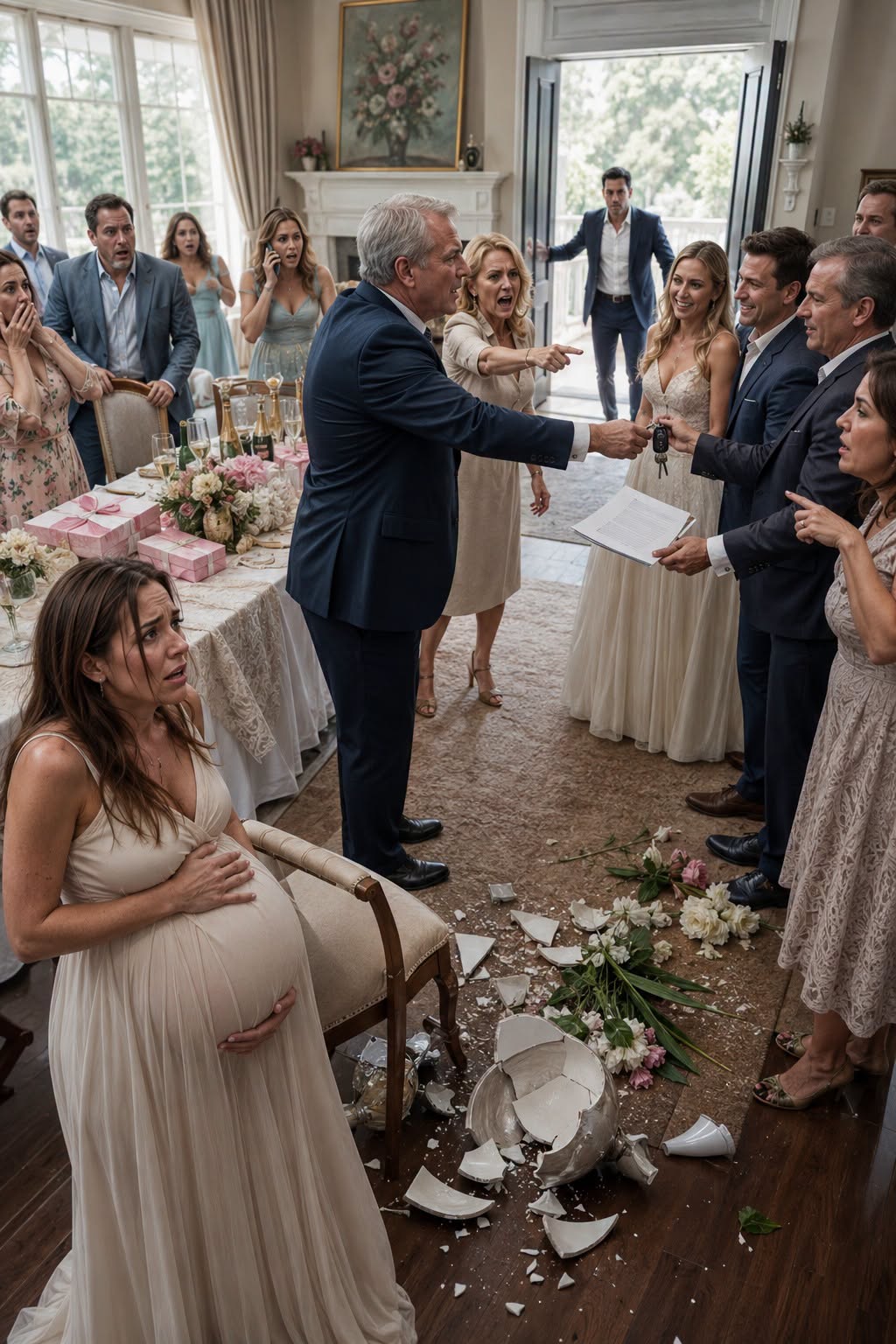
The vase.
The floor.
My baby.
I tried to sit up.
Pain shot through me so sharply I cried out.
Callum appeared beside me before the nurse even reached the bed. His hair was messy, his shirt wrinkled, his eyes red like he had not blinked in hours.
“The baby,” I rasped.
He took my hand.
“He’s alive.”
The room tilted again, but this time it was relief.
Callum pressed my knuckles to his mouth and cried without trying to hide it.
“He’s early. He’s small. They have him in the NICU, but he’s breathing on his own. The doctor said that is a very good sign.”
I closed my eyes.
For the first time that night, I let myself sob.
Not loudly. I did not have the strength. Tears slid into my hair, and Callum wiped them away like each one mattered.
“What’s his name?” he asked softly.
We had argued for months about names. I liked classic names. Callum liked strange ones that sounded like mountain ranges or old musicians.
But in that moment, one name came to me with perfect clarity.
“Atlas,” I whispered.
Callum smiled through tears.
“Atlas Vale Mercer,” he said. “Strong enough to hold up the sky.”
Three hours later, they wheeled me to the NICU.
Atlas lay inside a clear incubator, tiny beneath a soft blanket, wires taped to his chest, one hand curled near his cheek. He was so small that fear went through me all over again. His skin looked too delicate for the world.
I pressed my palm against the plastic.
“Hi, baby,” I whispered. “I’m sorry.”
Callum stood behind me.
“You did not do this.”
But mothers know guilt differently. It finds cracks even where it does not belong.
For eleven days, the NICU became our world. We learned the rhythm of machines. We learned which alarms meant danger and which meant Atlas had kicked a sensor loose. We learned the smell of hospital soap, warmed blankets, and vending-machine coffee at three in the morning.
Callum’s parents drove down from Portland with groceries, clean clothes, and a quiet tenderness that confused me at first.
His mother, Junia, brushed my hair when I was too sore to lift my arms.
His father, Everett, sat beside the incubator and read Atlas the business section in a low voice because he said, “A boy should know the market early.”
I laughed for the first time after the surgery.
Then I cried because laughing hurt.
Nobody from my family came.
Not that they could have.
By the second day, Callum told me what happened after the ambulance left.
My mother had been arrested at the venue. My father too, after deputies reviewed footage of him trying to move broken pieces away and repeat the lie about me slipping. Lyric was arrested after they confirmed she had taken the keys and had already let Ryker’s mother believe the truck was an engagement gift.
Ryker ended the engagement in the parking lot.
His mother called my sister “a liability in lipstick.”
I wished I had been awake to hear it.
On the third day, a lawyer representing my parents called Callum’s office and asked if we were open to “resolving this privately.”
Callum put the call on speaker in my hospital room.
I was holding a tiny bottle of pumped milk, exhausted and stitched together, wearing mesh underwear and a hospital gown that tied wrong at the back.
The lawyer said, “Mrs. Mercer may be emotional right now, but surely she understands that criminal proceedings will permanently damage her family.”
I looked at Callum.
He looked at me.
For almost thirty years, I had been trained to soften first. To consider everyone else’s future first. To worry what consequences might do to people who had never worried what their cruelty did to me.
That woman died on the floor of the lake house.
I said, “Tell them I want every charge pursued.”
The lawyer paused.
Callum leaned closer to the phone.
“You heard my wife.”
After he ended the call, I stared at the ceiling.
My heart was pounding, but not from fear.
From release.
That afternoon, a deputy came to take my statement. Then an assistant district attorney named Nora Keene came two days later, carrying a leather folder and wearing the kind of calm expression people wear when they have seen too much to be easily shocked.
She sat beside my bed and said, “I watched the footage.”
I nodded.
She did not ask me if I wanted to forgive them.
She did not say families were complicated.
She said, “It is clear. It is serious. And because you were pregnant, the state will treat the circumstances accordingly.”
I looked toward the NICU hallway.
“Good.”
Nora studied me for a moment.
“Are you certain you want to proceed fully? Once this starts moving, it will become very hard for them.”
I thought about my mother pulling Ryker’s mother away from me so her dress would not be stained.
I thought about Lyric’s purse closing around my keys.
I thought about my father saying, “She slipped.”
May you like



Then I looked at Nora.
“I hope it becomes impossible for them.”







