Chapter 8
### Part 8
For three weeks, they tried every door they knew.
Calls. Texts. Emails. Messages through relatives. A handwritten letter from Mom that smelled faintly of her rose perfume and said, “We made mistakes,” before spending three pages explaining why desperate people do desperate things. A voicemail from Dad that began with, “I may have been too forceful,” and ended with, “But you have always been stubborn.”
Talia sent one message that was different.
“I am sorry I didn’t ask you. I wanted it so badly that I let myself believe whatever Mom and Dad said. That’s on me.”
I read that one more than once.
Then I replied, “Thank you for saying that. I need distance.”
She wrote back, “I understand.”
For the first time in my life, I did not reward a small apology with immediate access to me.
That was new.
It felt cruel for about six minutes.
Then it felt like breathing.
My new apartment changed slowly. I bought a narrow blue sofa from a woman moving to Arizona. I hung curtains that did not match anything but made the room feel softer at night. I found a diner two blocks away where the waitress called everyone “hon” and remembered that I liked hash browns extra crispy. I learned which stair squeaked loudest and which washing machine in the basement stole quarters.
The bakery downstairs became my alarm clock. At 5:30 every morning, the smell of bread rose through the floorboards. Warm yeast. Sugar glaze. Coffee. It was not Lake Michigan, but it was alive.
Work noticed before I told anyone.
My assistant, Nola, stopped beside my desk one afternoon and said, “You look different.”
“Bad different?”
“No. Like someone finally stopped carrying a couch upstairs alone.”
I laughed so hard I nearly cried.
In February, Vivian took me to lunch to celebrate the sale. She wore a red scarf and ordered fries for the table like a woman who believed all victories required potatoes.
“How’s the family fallout?” she asked.
“Still falling.”
“Regrets?”
I looked out the restaurant window at people stepping over slush in the crosswalk.
“About selling? No.”
“About not warning them?”
I thought about that.
There had been nights when guilt tried to crawl under my door. I imagined Ivy crying beside the moving truck. I imagined Talia humiliated in front of strangers. I imagined Mom clutching her tissue, Dad red-faced and shaking.
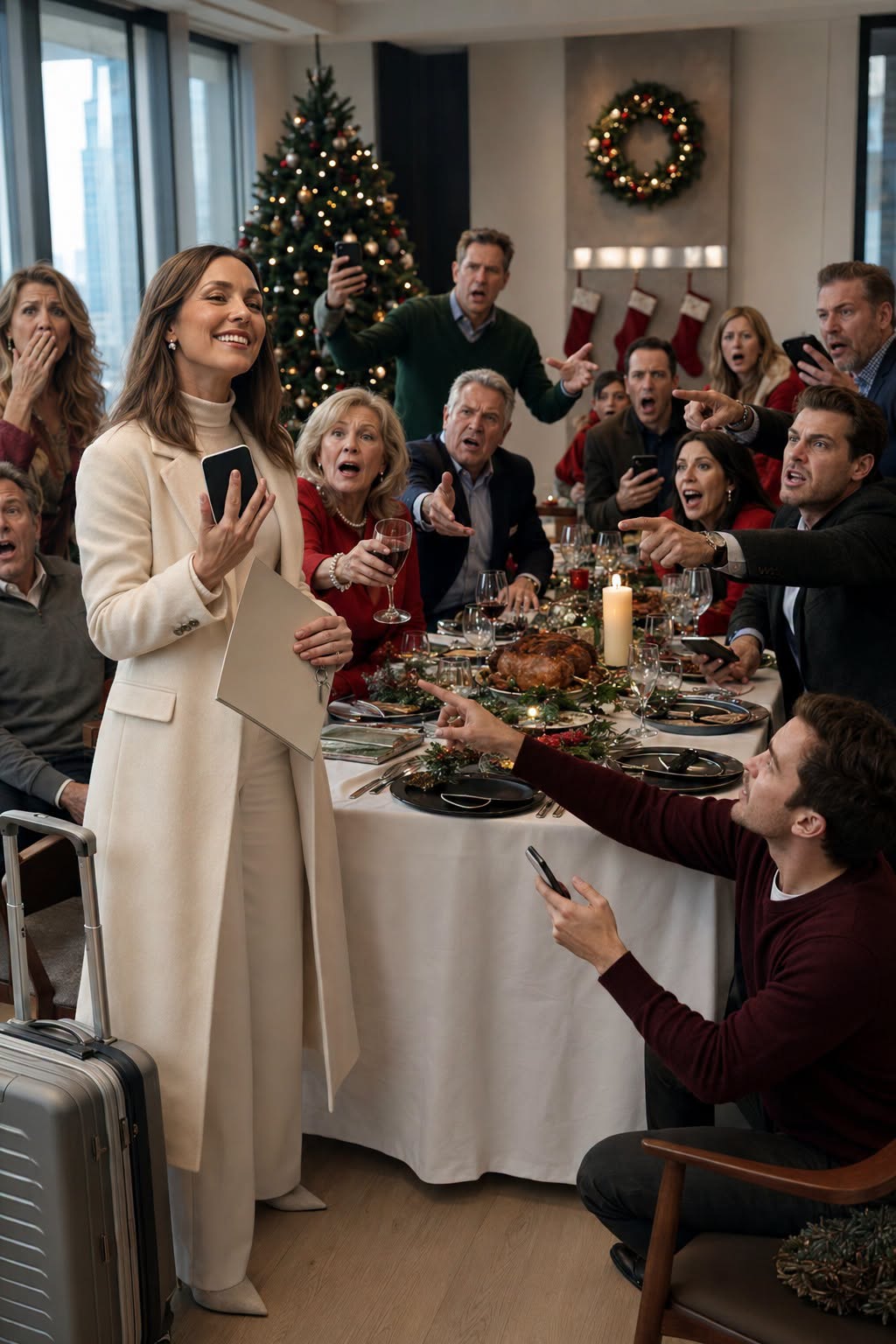
Then I remembered Christmas dinner.
The applause.
The gift cards.
The copied keys.
The way nobody asked where I would go.
“No,” I said. “Warning them would have given them time to pressure me. Selling gave me freedom.”
Vivian lifted her coffee cup.
“To freedom.”
“To locks that work.”
She laughed.
Spring came slowly. Dirty snow melted into gutters. The bakery added lemon pastries. I started walking after work with no destination, learning my new neighborhood by smell and sound: wet pavement, dog parks, bus brakes, cut grass, grilled onions from a hot dog stand near the train stop.
One Saturday, I drove past the old condo building.
I did not plan to. My errands took me nearby, and suddenly there it was, sunlight flashing off the windows, the lake bright behind it.
My chest tightened.
Then I saw Mabel on the balcony, wrapped in a yellow cardigan, watering a planter full of red flowers.
She spotted my car at the light and waved.
Not like she owned something I had lost.
Like she was taking care of something I had survived.
I waved back.
The light turned green.
I drove on.
By summer, contact with my family had narrowed to controlled channels. Talia and I exchanged occasional texts, mostly about the kids, never about money. She got a part-time job at a medical office. Brenner, according to her, was “figuring things out,” which sounded exactly like Brenner and nothing like my responsibility.
Mom still tried emotional weather reports.
“Your father barely sleeps.”
“The family misses you.”
“Fourth of July won’t feel right without you.”
I replied when I wanted to. Briefly. Clearly. Without apology.
Dad did not text for months.
Then, in August, he sent one line.
“Maybe we should talk.”
I stared at it while sitting at my kitchen table, eating toast over a paper towel because I still hated doing dishes.
The old me would have felt chosen.
The new me felt cautious.
I wrote, “You can email what you want to say.”
Three days later, he did.
His email was stiff. Awkward. Full of phrases that sounded like he had searched online for “how to apologize to adult daughter.” But buried in the middle was one sentence that mattered.
“I treated your independence like a family resource instead of something you earned.”
I sat with that sentence for a long time.
It did not fix everything.
It did not erase the dinner.
It did not return the years I had spent being the backup plan.
But it was a crack in the wall.
I answered, “That is true. I appreciate you acknowledging it. I am not ready for things to go back to normal, and I do not want normal back.”
He replied the next day.
“I understand.”
Maybe he did. Maybe he was learning. Maybe he simply knew commands no longer worked.
Either way, I did not rush to forgive him just because he finally knocked instead of breaking in.
Christmas came again.
I did not go to my parents’ house.
Mom cried when I told her, but I did not soften the boundary.
“I hope you have a peaceful holiday,” I said. “I mean that.”
“Will we see you at all?” she asked.
“Not this year.”
“Maris, it’s Christmas.”
“I know.”
That Christmas Eve, I hosted dinner in my small apartment for three people: Nola from work, Vivian, and Greer, my landlord, who brought a bottle of sparkling cider and complained lovingly about everyone’s parking habits. We ate roast chicken because turkey felt too formal. The bakery downstairs sent up a box of cinnamon rolls. Nothing burned.
My table was small. The chairs did not match. The alley window reflected our faces back at us, bright with candlelight.
At 8:12 p.m., my phone buzzed.
A photo from Talia.
Ivy and Milo in front of a lopsided Christmas tree in a modest rental living room. Purple paper snowflakes hung in the window. Milo wore pajamas with planets on them.
Talia’s message said, “We made it work. Merry Christmas, Maris. Thank you for forcing me to grow up, even though I hated it.”
I smiled.
Then another message arrived from Mom.
A picture of my old kitchen towels, the Christmas gift she had given me the year before. She had written, “I was wrapping presents and found the receipt. I realized I gave you towels while giving your home away. I am sorry.”
That one hurt.
Not because it fixed anything.
Because it proved she had finally seen the shape of what she had done.
I did not answer immediately. I placed the phone face down and returned to the table, where Vivian was telling Greer an outrageous story about a buyer who tried to negotiate a house price because he did not like the neighbor’s cat.
For once, I stayed inside my own evening.
Later, after everyone left, I stood in the quiet kitchen washing plates by hand. Snow tapped softly against the window. The apartment smelled like cinnamon, chicken, and candle smoke. My brass lamp glowed in the living room. The lake print hung above the mantel, no longer a memorial, just a piece of art I liked.
I thought about the condo.
I thought about the dining table where my father raised his glass.
I thought about seventy-nine missed calls.
For years, I believed love meant being easy to reach, easy to convince, easy to use. I believed peace meant swallowing the first insult, then the second, then the tenth, until everyone praised me for having no appetite of my own.
That Christmas taught me something better.
Peace is not the absence of conflict.
Sometimes peace is a changed lock.
Sometimes peace is a bank transfer, a signed closing statement, a quiet apartment above a bakery, and a phone you no longer answer just because it rings.
I did not forgive my family in the way they wanted. I did not return to the old table and let them pretend the applause had been love. I did not become cruel either. I became unavailable for my own destruction.
And that was enough.
Because I did not lose my home when I sold that condo.
I lost the version of myself who would have handed over the keys.
May you like



And she was the only thing I was grateful never to get back.
THE END!







