Chapter 6
PART 6
The trial began in January, when Boston was buried under dirty snow and the courthouse steps glittered with ice.
Arthur Reed arrived in a charcoal coat, his silver hair combed perfectly, his wife’s hand looped through his arm, his face arranged into solemn innocence. Grant arrived separately, thinner than before, eyes hidden behind dark glasses. He did not look at Donovan.
Noah did not attend the first week.
Donovan refused to let the courtroom turn his son into a display.
But Claire testified.
She walked to the stand in a navy dress borrowed from Donovan’s legal team and shoes Sophie had helped pick. The defense tried to make her small. They asked about the missing cash. They asked about old evictions. They asked why she had waited so long.
Claire answered every question.
“I waited because men with money made the truth dangerous.”
Arthur’s lawyer smiled. “And now men with money have made your truth profitable?”
Claire looked at the jury.
“My daughter ate peanut butter for dinner three nights a week because I refused to sell that recording. If I wanted profit, I chose a strange way to chase it.”
A juror wrote that down.
Sophie testified two days later.
Donovan had argued against it. Claire had argued harder. Sophie herself ended the debate.
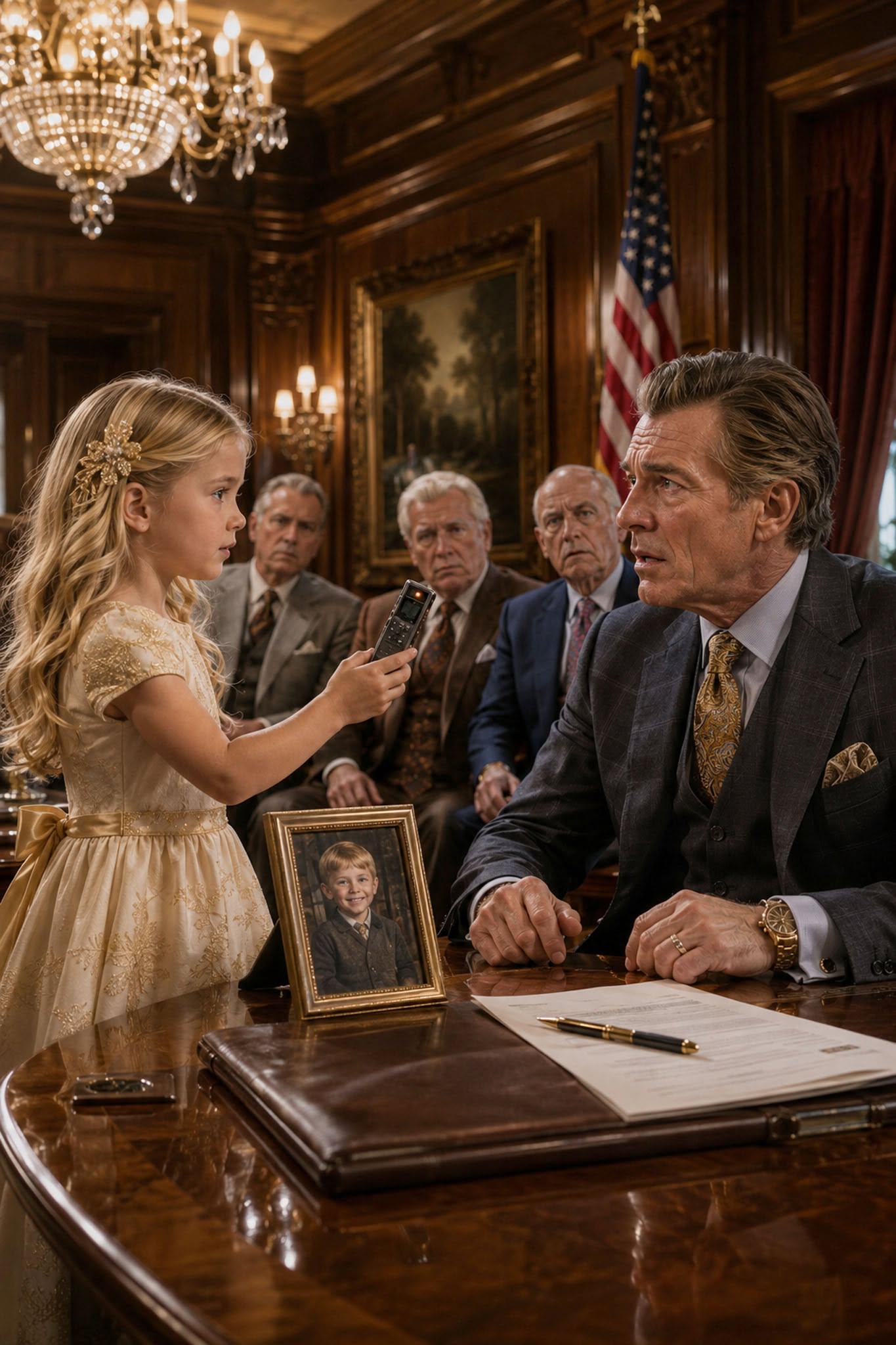
“I carried Daisy into that room,” she said. “I can carry my words into this one.”
On the stand, she looked impossibly young. Her feet barely touched the floor again. But when Arthur’s lawyer asked whether her mother had coached her, Sophie tilted her head.
“My mom taught me not to lie. Mr. Reed taught me why some adults do.”
The courtroom murmured.
The judge called for order.
Then came the recording.
The prosecutor did not play it dramatically. No music. No speeches. Just the cleaned audio from the memory card, authenticated by experts and matched to Arthur’s lighter clicks, Grant’s voice, clinic time stamps, and transport logs.
Static filled the courtroom.
A bell.
A child coughing.
Arthur’s voice: “A grieving father signs anything.”
Grant’s voice: “If Noah remembers the boathouse, this is over.”
Donovan stared straight ahead.
Noah sat in a private room down the hall with Marco, listening only to what his therapist allowed. Later, he would tell Donovan that hearing the truth hurt, but not as much as wondering if he had imagined it.
On the fourth week, Grant took a plea.
That was what cowards did when walls moved inward. They turned confession into strategy.
He admitted to arranging Noah’s removal from the clinic. He claimed he never intended permanent harm. He said Arthur had designed the false paperwork. He said Grayfield House was supposed to “keep the boy safe” until the trust was settled.
The prosecutor asked one question.
“Safe from whom?”
Grant did not answer.
Arthur refused a plea.
Pride finished what greed had started.
His defense collapsed under records Claire had saved, accounts Donovan opened, and a former Grayfield nurse who admitted she had been paid to call Noah by another name until he stopped answering to his own.
When the verdict came, the courtroom was silent.
Guilty.
Guilty.
Guilty.
Arthur stared forward as if the jury had misunderstood the language.
Grant bowed his head.
Donovan felt no joy.
That surprised him. For months, he had imagined the verdict as fire, as thunder, as the moment grief would become justice and justice would become peace. Instead, it felt like a door closing on a room that still smelled of smoke.
Outside court, reporters screamed questions.
“Mr. Hale, do you forgive your brother?”
Donovan stopped.
Noah stood beside him now, taller in his winter coat, still too thin but steadier. Claire and Sophie waited near the car. Daisy the bunny peeked from Sophie’s backpack.
Donovan looked into the cameras.
“Forgiveness belongs to the people who were hurt,” he said. “Accountability belongs to everyone.”
That line ran on every news channel by dinner.
But the more important moment happened later, away from cameras.
Back at The Copper Finch, Donovan gathered the restaurant staff, former employees, and families harmed by the Hale companies. He stood beneath the old private room lights, where the unsigned contract had once waited.
On the table was a new document.
Not a trust transfer.
A dissolution plan.
The Hale Family Trust would be broken apart. Legal businesses sold or converted into employee-owned companies. Dirty holdings surrendered. A victims’ fund created. Scholarships established in Sophie and Noah’s names, though Sophie complained that putting her name on a scholarship made her sound dead.
Noah laughed when she said it.
It was the first full laugh Donovan had heard from him since Maine.
The sound stopped the room.
Everyone pretended not to notice, which was the kindest thing they could have done.
Claire became director of the new foundation’s worker protection program. She refused the title at first.
“I cleaned offices,” she said.
Donovan answered, “That means you know which people get ignored.”
She took the job.
Sophie placed Daisy in a small glass case for the first week of the foundation’s opening, beside copies of the evidence that had changed everything. But on the second week, she took the rabbit back.
“She’s not evidence,” Sophie said. “She’s family.”
Noah nodded seriously.
“Family shouldn’t live in glass.”
Donovan heard that from across the room.
That night, he removed every locked display from the mansion except one.
The red fire truck stayed on the library shelf.
May you like



Not as proof.
As a promise.







